
Essential details
Shipping:Express Delivery
Product Introduction
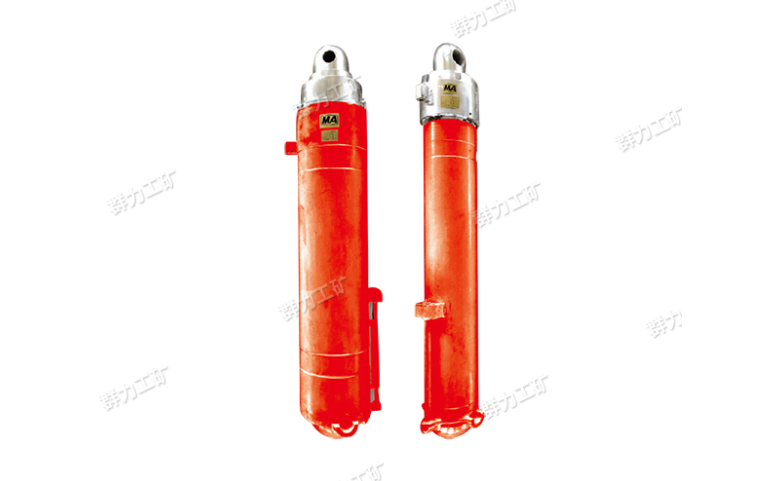
Hydraulic support single telescopic column
φ140, φ160, φ180, φ200, φ210, φ220, φ230, φ250, φ280, φ300, φ320
The single telescopic column is the core bearing component of the hydraulic support. It is mainly used to support the roof and maintain the stability of the working surface space. Its structure is simple and widely used in various types of fully mechanized mining working faces.
Working principle
The single telescopic column is a double-acting hydraulic cylinder, which realizes column lifting and column lowering through the hydraulic system:
Lifting column (supporting the top plate):
High-pressure oil enters from the liquid inlet (rodless cavity) at the bottom of the cylinder, pushing the piston rod to extend, and the top beam rises to support the top plate. At this time, the oil in the rod cavity (piston rod cavity) flows back to the oil tank.
Lowering column (recycling column):
High-pressure oil enters from the liquid inlet of the piston rod cavity, pushing the piston rod to retract and the top beam to descend. The oil in the rodless cavity flows back and the column is recovered.
Holding pressure state:
After the lifting column is in place, a constant support force is maintained through the safety valve in the hydraulic system. When the pressure from the top plate exceeds the set value, the safety valve automatically relieves the pressure to prevent overload damage to the column.
Structural composition
The single telescopic column is a single-stage hydraulic cylinder with a relatively compact structure and mainly consists of the following parts:
Cylinder:
Processed from high-strength seamless steel pipes or forgings, the internal surface is precision bored and honed to ensure sealing performance.
The bottom of the cylinder is usually welded with a base or connecting ear plate for fixing to the base of the hydraulic support.
Piston rod:
The material is alloy structural steel (such as 27SiMn), and the surface is treated with chromium plating (hard chromium layer thickness 15-50μm) or nickel-phosphorus plating to improve wear resistance and corrosion resistance.
There is a connecting head on the top, which is hinged with the top beam of the bracket through a pin.
Guide sleeve:
Installed on the top of the cylinder, it is used to guide the linear motion of the piston rod and prevent unbalanced loading. The guide sleeve is mostly made of copper alloy or high-strength cast iron, and the inner surface is processed with sealing grooves.
Sealing system:
Including piston seals (such as Y-shaped, bud-shaped seals), guide rings (to prevent metal contact), dust rings (to prevent coal dust from entering), etc., to ensure sealing and durability under high pressure.
Hydraulic interface:
The bottom of the cylinder and the piston rod cavity are respectively equipped with liquid inlets, which are connected to the hydraulic system through rubber hoses to realize the lifting and lowering of the column.