
Essential details
Shipping:Express Delivery
Product Introduction
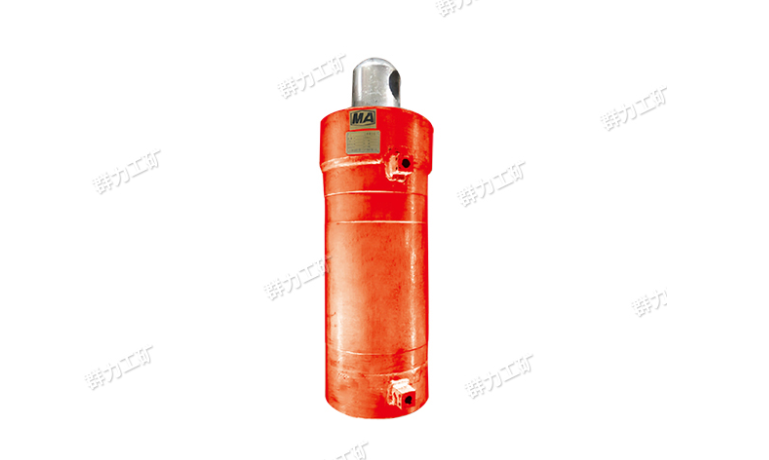
Hydraulic support jack
φ63, φ80, φ100, φ110, φ125, φ140, φ160, φ180, φ200, φ210, φ220, φ230, φ250, φ280, φ300
The tail boom jack is one of the key components of the hydraulic support. It is mainly used to control the swing angle and position of the support's tail boom to achieve functions such as placing coal, breaking coal blocks, and maintaining the top coal flow state on the working face.
Structural composition
Basic structure: Similar to other hydraulic jacks, it mainly consists of cylinder, piston rod, guide sleeve, seal, connector (trunnion or pin), etc.
Special design:
Due to the need to withstand frequent impact loads and coal and rock extrusion, the cylinder block and piston rod are usually made of high-strength alloy steel, and the surface is chrome plated or quenched to improve wear resistance and corrosion resistance.
Some tail boom jacks are equipped with mechanical extension rods or multi-stage telescopic structures to adapt to different mining heights and coal placement requirements.
Working principle
The tail boom jack is a double-acting hydraulic cylinder that controls the movement of the tail boom through the hydraulic system:
Extend (raise the tail boom):
High-pressure oil enters the rodless cavity (piston cavity) of the jack, pushing the piston rod to extend, and the tail boom swings upward to support the top coal or adjust the angle of the coal discharge port.
High-pressure oil enters the rodless cavity (piston cavity) of the jack, pushing the piston rod to extend, and the tail boom swings upward to support the top coal or adjust the angle of the coal discharge port.
Retract (lower the tailboom):
High-pressure oil enters the rod cavity (piston rod cavity), the piston rod retracts, the tail boom swings downward, and the coal opening is opened, allowing the top coal to fall to the working face conveyor.
High-pressure oil enters the rod cavity (piston rod cavity), the piston rod retracts, the tail boom swings downward, and the coal opening is opened, allowing the top coal to fall to the working face conveyor.
Swing adjustment:
By repeatedly telescopically extending the jack, the tail boom can swing back and forth to break large pieces of coal and rock and prevent the top coal from clogging the coal discharge port.
By repeatedly telescopically extending the jack, the tail boom can swing back and forth to break large pieces of coal and rock and prevent the top coal from clogging the coal discharge port.