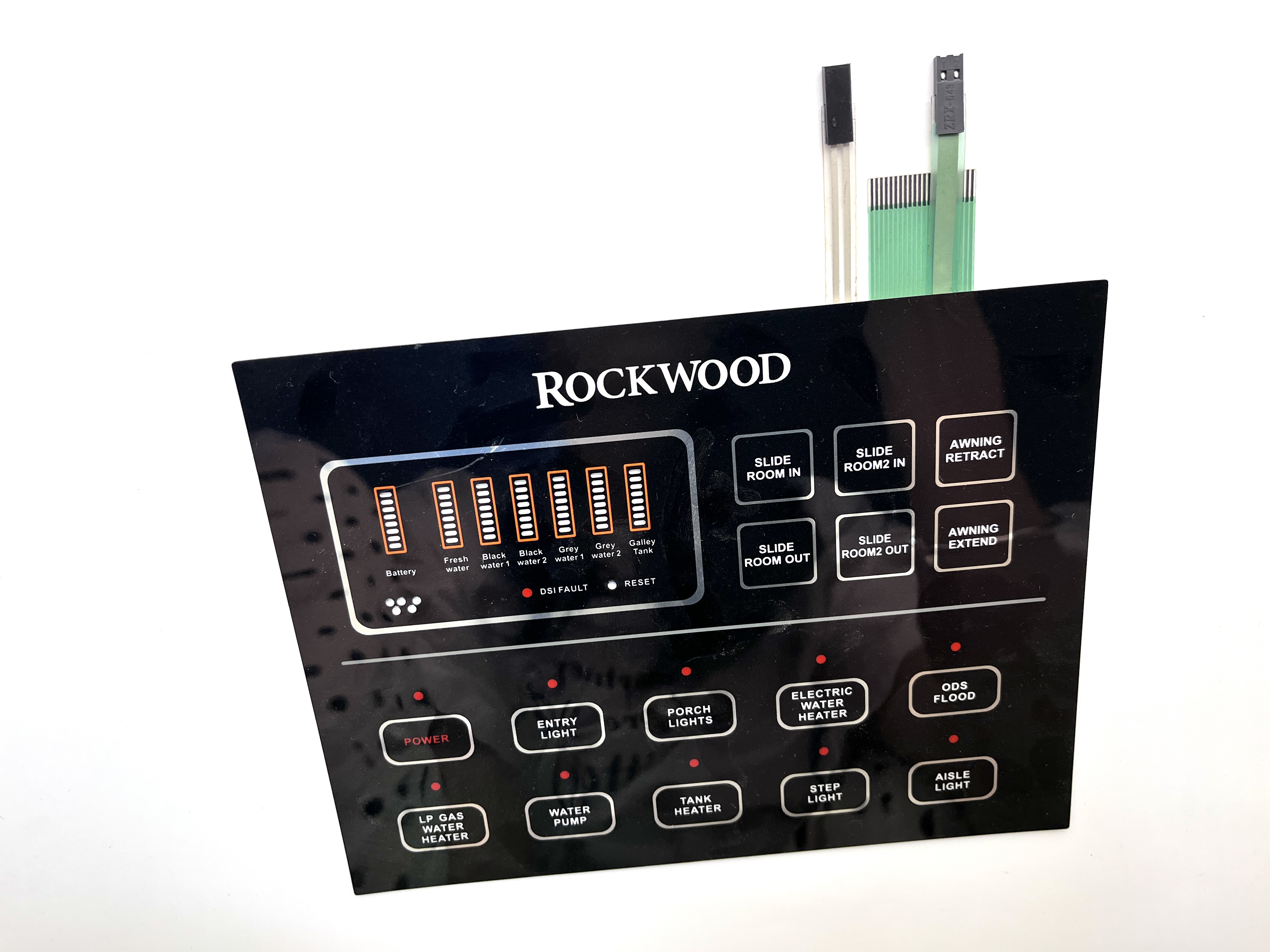
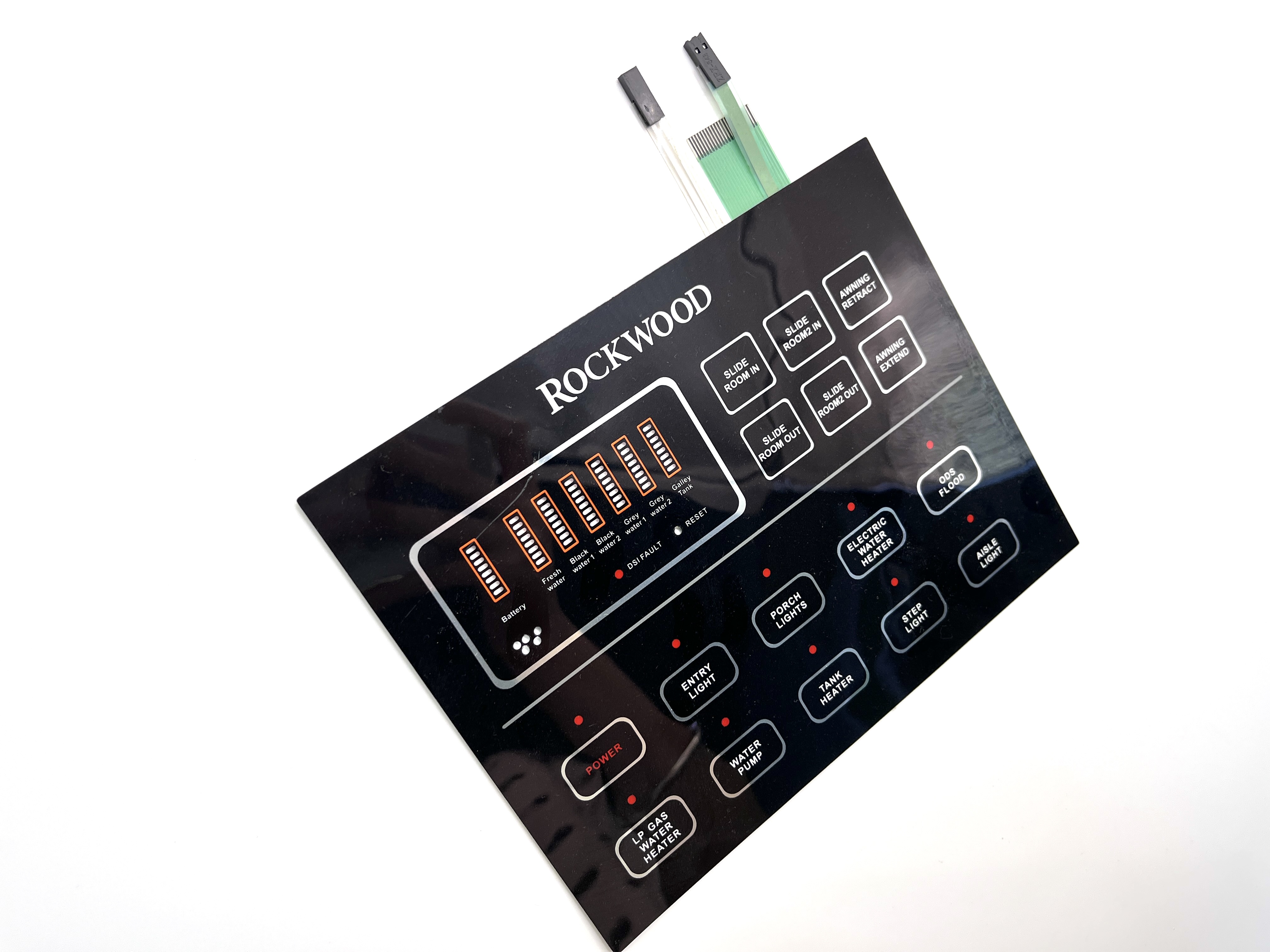
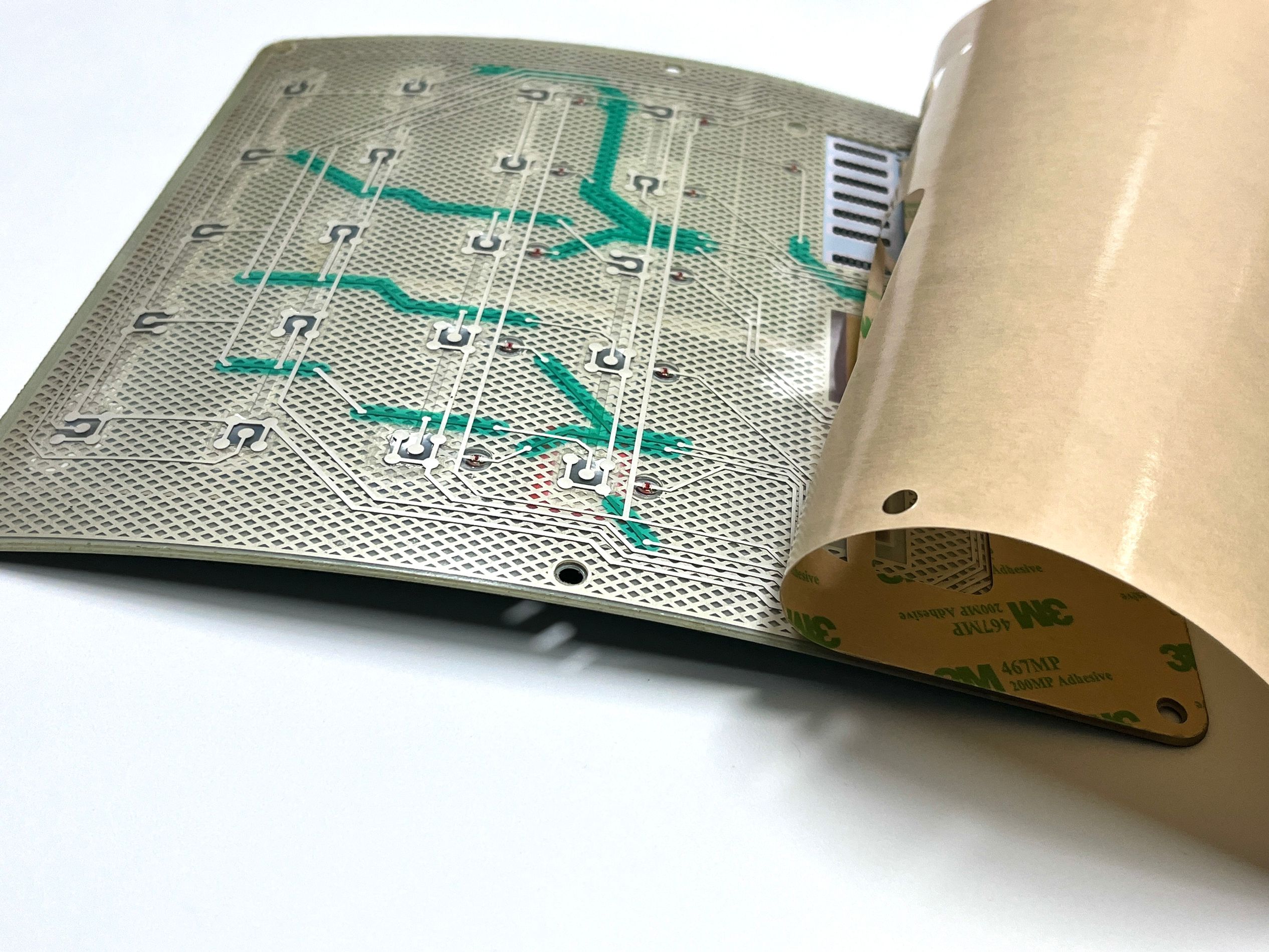
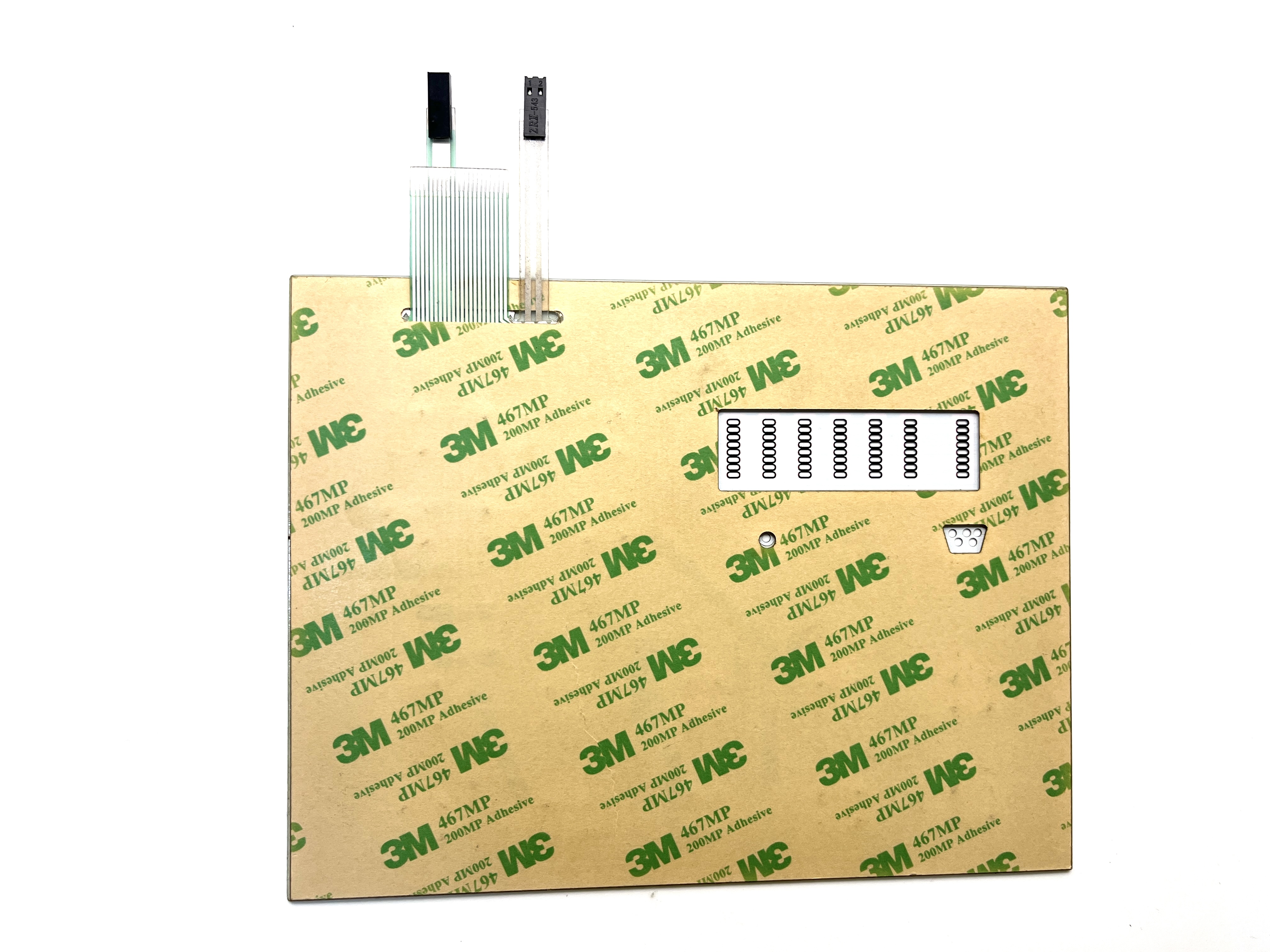

Customized Design Polycarbonate Pressure Sensitive Membrane With Metal Dome
Key Features
Pressure Sensitivity: Unlike regular buttons, pressure-sensitive membranes can recognize different levels of force, allowing for nuanced input.
Thin and Flexible: They are often made of thin, flexible materials, making them suitable for integration into various designs.
Durable: Many pressure-sensitive membranes are designed to withstand repeated use and are resistant to wear.
Applications
- Musical Instruments: Used in electronic keyboards and MIDI controllers for expressive playing.
- Consumer Electronics: Found in devices like smartphones and tablets.
- Industrial Controls: Utilized in control panels and machinery interfaces.
- Medical Devices: Employed in patient monitoring equipment and diagnostic tools.
Working Principle
Pressure-sensitive membranes typically operate based on one of the following principles:
- Resistive: The change in pressure alters the electrical resistance of the material.
- Capacitive: The pressure changes the capacitance between conductive layers.
- Piezoelectric: Pressure generates an electrical charge in piezoelectric materials.
Integration with Arduino
To use a pressure-sensitive membrane with an Arduino, follow these steps:
Components Needed
- Arduino board (e.g., Arduino Uno)
- Pressure-sensitive membrane sensor
- Resistors (if needed)
- Jumper wires
- Breadboard (optional)
Wiring
Connect the Sensor: Follow the specific wiring instructions provided with your sensor. Typically, you will connect the sensor's output to an analog pin on the Arduino.
Power and Ground: Ensure the sensor is powered correctly (usually to 5V and GND).
Explanation of the Code
- Analog Read: The
analogRead()function reads the voltage level from the sensor, which corresponds to the amount of pressure applied. - Serial Output: The value is printed to the Serial Monitor, allowing you to see the changes in pressure.
Specification:
| Overlay material ---For front or face overlay | ||||||||
| Polyester | Polycarbonate | |||||||
1 Highly versatile for embossing | 1 wide range of the surface finishes and thicknesses | |||||||
| Embossing --- Graphic overlay or up circuit can be embossed in order to insert metal stainless steel domes for good tactile when press .Leave space for mechanical keys and provide tactile indications | ||||||||
| Pedestal embossing | Rim embossing | Pillow embossing | Dim embossing | |||||
| Windows or LCD --- For display functions | ||||||||
| Printed colors windows such like red ,black and so on | Transparent finishes windows | |||||||
| Keys | ||||||||
| Tactile Keys :witch metal domes or Poly domes ,Metal dome with different diameter and pressure kinds | Non-tactile keys: printed silver spot on the circuit | |||||||
| LEDs ---Miniature LEDs ,LED colors :white ,Green ,Red ,Blue ,Yellow ,Orange and others | ||||||||
| EL and Sensors or inductors --- EL can be light any place where where you like ,and sensors can be used as LEDs | ||||||||
| Cables --- is extension of circuit and communication with your device | ||||||||
| Screen printing conductive silver cable | Copper plated cable /Polyimide or FPC | PCB cable | ||||||
| Types of connector --- 1 Zero insertion force(ZIF) with 0.5MM ,1.0MM,1.25MM pitch ;2 Female connector with 2.54MM pitch; 3 Male connector | ||||||||
| Shielding --- For protection function | ||||||||
| Gasket seal/Waterproof :protect the conductors against from the humidity and splashes | EMI/RFI/ESD Shielding: use an Aluminum foil shielding /clear ITO electrical conductive polyester to protect | |||||||
| Rear Adhesive --- Mostly use the 3M double-side mounting glue brand of USA. Also accepted others such like Lohmann and others | ||||||||
| Back plate --- Use in Aluminum ,Polycarbonate ,Acrylic Or PMMA | ||||||||
| Matching color --- PMS or RAL Is best ,CMYK or RGB also can be ok if you can supply PMS Or RAL | ||||||||
| Standard Tolerances :+/-0.2MM | ||||||||

