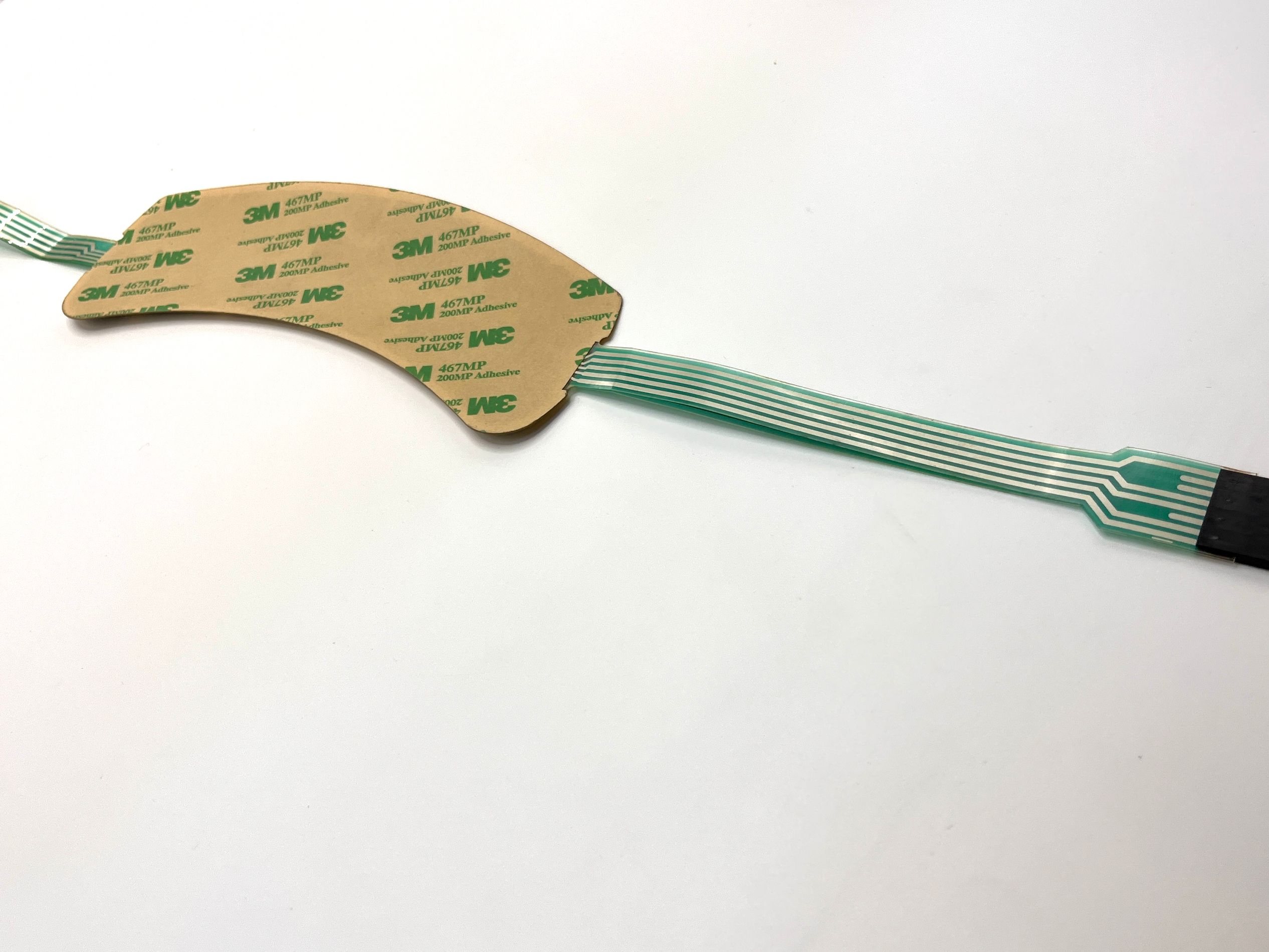
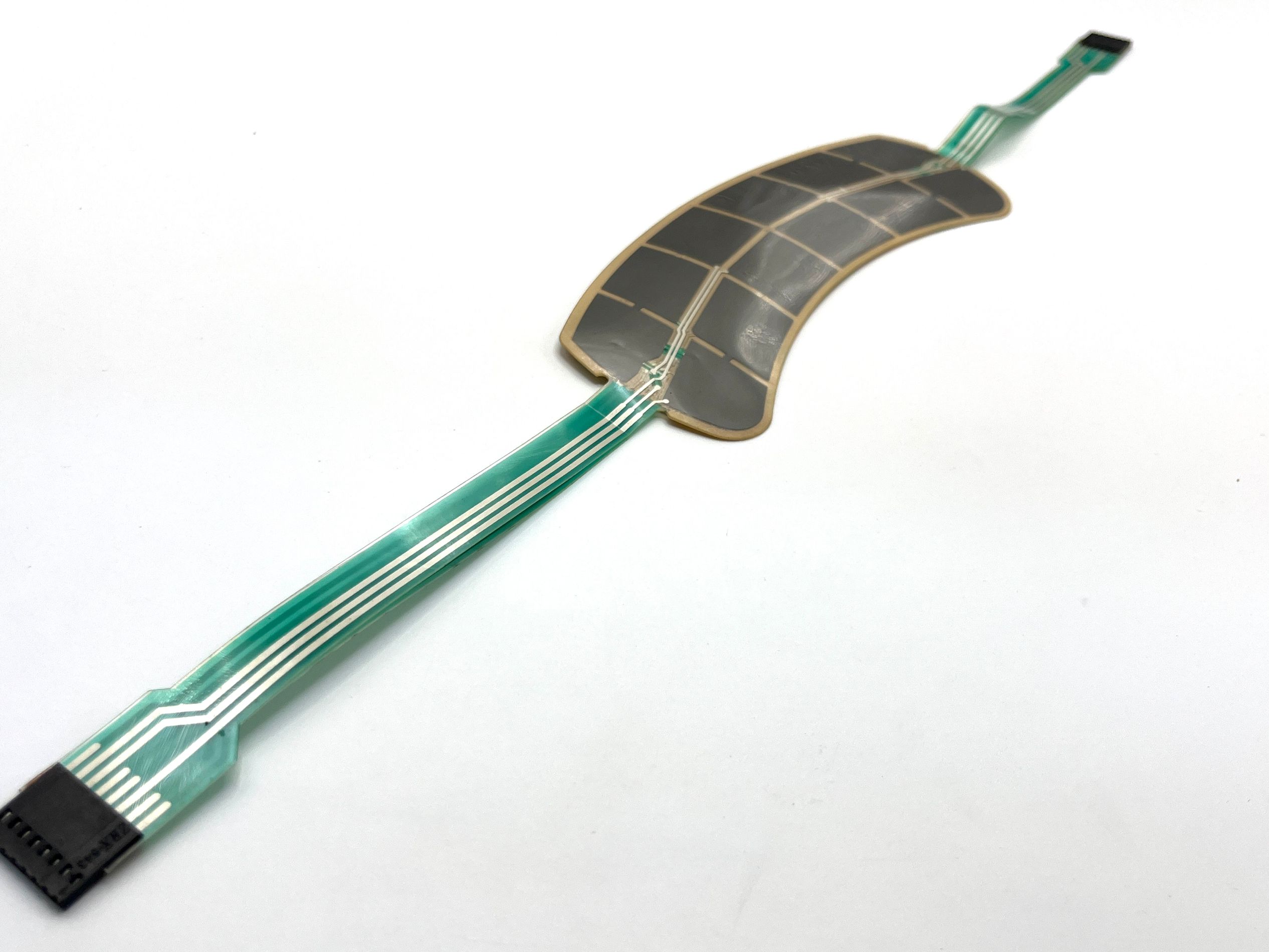
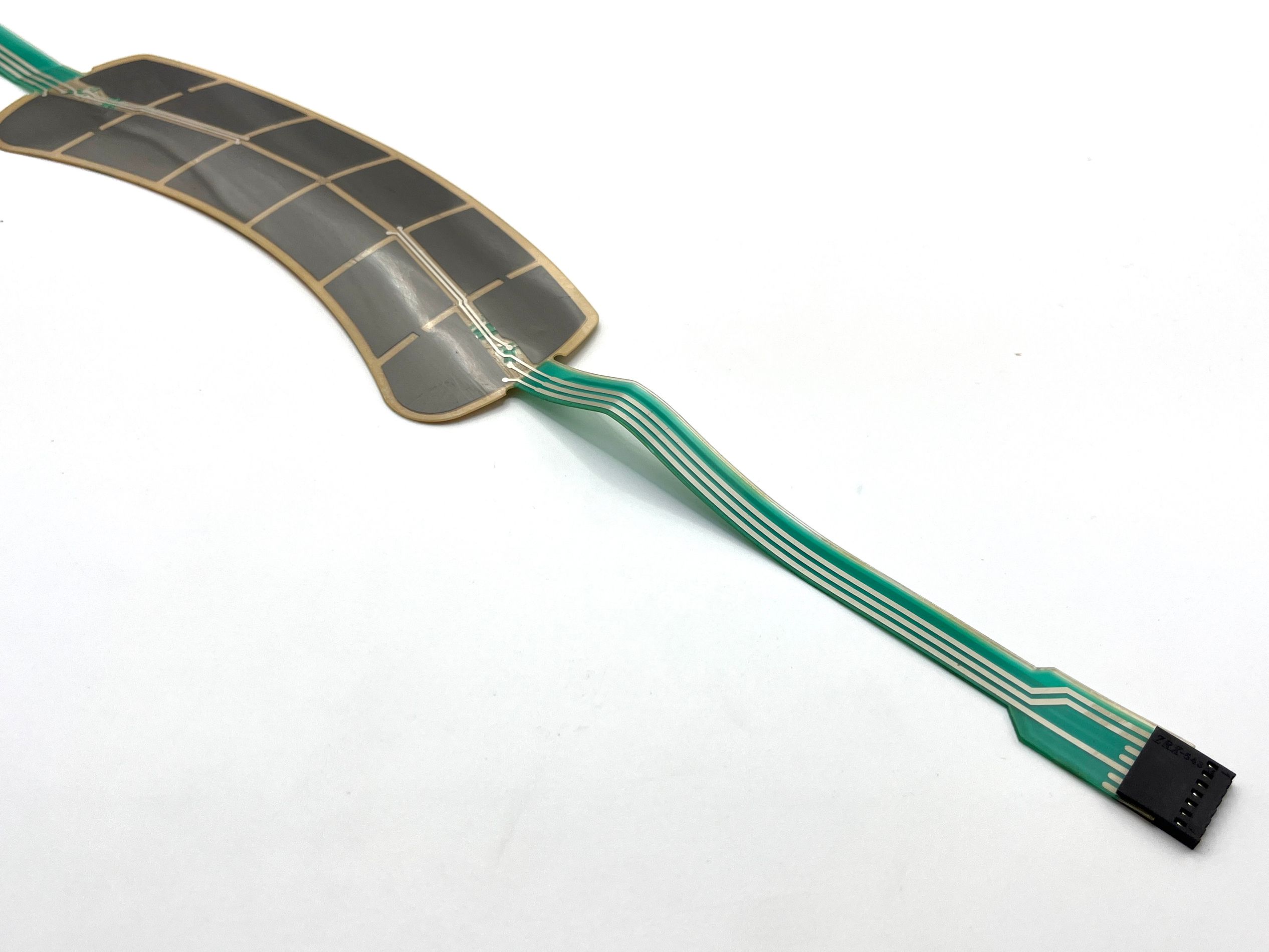

Screen Printing Circuit Capacitive Touch Switch With Female Housing
How Capacitive Touch Switches Work
Capacitance Principle: Capacitive touch switches operate based on the principle of capacitance, which is the ability of a system to store an electric charge. The switch typically consists of two conductive layers separated by an insulating material, forming a capacitor.
Detection Mechanism: When a conductive object, such as a human finger, approaches or touches the switch, it alters the electric field between the conductive layers, changing the capacitance. This change is detected by the switch's circuitry, which continuously monitors capacitance levels.
Signal Processing: The detected change in capacitance is processed to determine if a touch event has occurred. Once identified, the switch can trigger a specific action, such as turning on a light or executing a command in a device.
Return to Baseline: After the touch event ends, the system resets to its baseline capacitance, ready for the next interaction.
Applications
Capacitive touch switches are commonly found in:
- Smartphones and tablets
- Touch-sensitive control panels and displays
- Consumer electronics
- Automotive interfaces
- Home automation systems
- Medical devices and public spaces.
Advantages and Disadvantages
Pros:
- Durability: No moving parts mean less wear and tear, leading to a longer lifespan.
- Sensitivity: Highly responsive, capable of detecting even slight touches.
- Aesthetic Design: Allows for sleek, flat surfaces without protruding buttons.
- Ease of Cleaning: Smooth surfaces are easier to clean, beneficial in hygiene-sensitive environments.
- Multitouch Support: Enables gestures like pinch-to-zoom.
Cons:
- Cost: Generally more expensive than mechanical switches.
- Environmental Sensitivity: Performance can be affected by temperature and humidity.
- False Touches: May register unintended touches due to environmental factors.
- Lack of Tactile Feedback: Users may miss the physical feedback provided by mechanical switches.
- Integration Complexity: Requires additional electronic components for integration.
Specification:
| Overlay material ---For front or face overlay | ||||||||
| Polyester | Polycarbonate | |||||||
1 Highly versatile for embossing | 1 wide range of the surface finishes and thicknesses | |||||||
| Embossing --- Graphic overlay or up circuit can be embossed in order to insert metal stainless steel domes for good tactile when press . | ||||||||
| Pedestal embossing | Rim embossing | Pillow embossing | Dim embossing | |||||
| Windows or LCD --- For display functions | ||||||||
| Printed colors windows such like red ,black and so on | Transparent finishes windows | |||||||
| Keys | ||||||||
| Tactile Keys :witch metal domes or Poly domes ,Metal dome with different diameter and pressure kinds | Non-tactile keys: printed silver spot on the circuit | |||||||
| LEDs ---Miniature LEDs ,LED colors :white ,Green ,Red ,Blue ,Yellow ,Orange and others | ||||||||
| EL and Sensors or inductors --- EL can be light any place where where you like ,and sensors can be used as LEDs | ||||||||
| Cables --- is extension of circuit and communication with your device | ||||||||
| Screen printing conductive silver cable | Copper plated cable /Polyimide or FPC | PCB cable | ||||||
| Types of connector --- 1 Zero insertion force(ZIF) with 0.5MM ,1.0MM,1.25MM pitch ;2 Female connector with 2.54MM pitch; 3 Male connector | ||||||||
| Shielding --- For protection function | ||||||||
| Gasket seal/Waterproof :protect the conductors against from the humidity and splashes | EMI/RFI/ESD Shielding: use an Aluminum foil shielding /clear ITO electrical conductive polyester to protect | |||||||
| Rear Adhesive --- Mostly use the 3M double-side mounting glue brand of USA. Also accepted others such like Lohmann and others | ||||||||
| Back plate --- Use in Aluminum ,Polycarbonate ,Acrylic Or PMMA | ||||||||
| Matching color --- PMS or RAL Is best ,CMYK or RGB also can be ok if you can supply PMS Or RAL | ||||||||
| Standard Tolerances :+/-0.2MM | ||||||||

