Some countries will impose an additional 15% tariff, China will not.
Created on 02.28
Following the Supreme Court's recent ruling that so-called "reciprocal tariffs" exceeded presidential authority and were illegal, the Trump administration quickly adjusted its tariff strategy. The previously announced measure to impose a uniform 10% tariff on global goods took effect this Tuesday (24th). Meanwhile, the U.S. is planning to further increase tax rates on some countries.
According to Reuters, U.S. Trade Representative Jamison Greer stated on the 25th that the government plans to raise tariffs on some countries from the current 10% to 15% or even higher, but will not add new tariffs on Chinese goods on the existing basis. In an interview with Fox Business Channel, he said that given President Trump's plan to visit China in the coming weeks, the U.S. will "strictly abide by the agreements reached with China" and has no intention of raising tariffs on China for the time being.
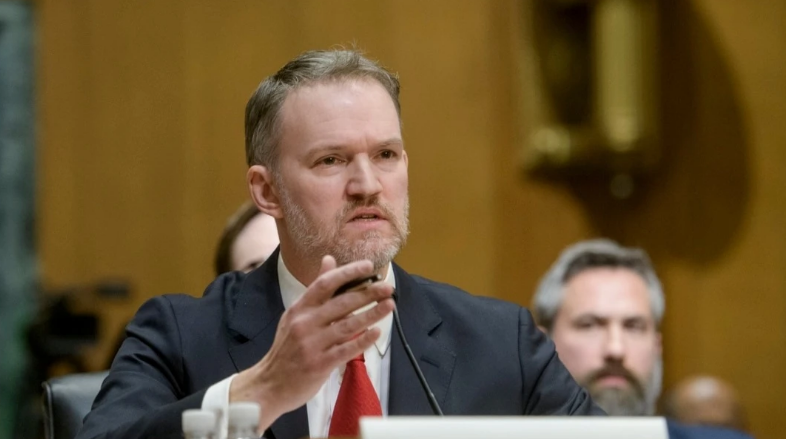
However, Greer simultaneously emphasized that the government will replace the emergency tariff measures previously rejected by the court with new legal tools. In addition to the temporary 10% tariff implemented under Section 122 of the "Trade Act of 1974," the U.S. will also launch new trade investigations under Section 301 of the same act targeting so-called "unfair trade practices," paving the way for subsequent collection of more sustained tariffs. He stated that the investigation targets will include countries accused of "overcapacity," "forced labor in supply chains," "discriminating against U.S. technology companies," or subsidizing agricultural and fishery products.
In the interview, Greer once again mentioned China's "overcapacity" issue and stated that the U.S. has repeatedly expressed its concerns to China. In response, China has repeatedly stated that the so-called "overcapacity" is unfounded and that relevant issues should be viewed objectively from the perspective of global division of labor and market demand.
Bloomberg pointed out that after the Supreme Court halted "reciprocal tariffs," the White House first implemented a uniform 10% tariff and is planning to raise it to 15%, but has not provided a clear path on how to balance existing trade agreement commitments, leaving many trading partners confused. Although Greer stated that "policy continuity" will be maintained, he did not specify which countries will have their tax rates increased.
He also revealed that it may take months for the government to restructure President Trump's tariff system within the framework of existing trade agreements. During this period, the U.S. will provide legal basis for implementing longer-term tariff measures targeting specific countries and industries through new investigation procedures.
On a practical level, Greer cited the reciprocal trade arrangement between the U.S. and Indonesia as an example, stating that the U.S. may investigate relevant Indonesian industries under Section 301 and decide the applicable tariff level accordingly. In addition, he also mentioned that Section 338 of the "Tariff Act of 1930" remains legally effective, and when it is determined that other countries discriminate against U.S. trade, tariffs of up to 50% can be imposed on related imported goods.
At the same time, Trump himself has sent a strong signal. He warned on social media that if any country attempts to "circumvent" existing commitments based on Supreme Court rulings, the United States will impose higher tariffs under other laws. Trump emphasized that even though tariffs under IEEPA were ruled invalid, the President can still take "more deterrent" trade measures using other legal tools.
In addition to general tariff adjustments, the U.S. government is also advancing a new round of industry-specific tariff plans. According to The Wall Street Journal, the White House is considering imposing so-called "national security tariffs" on six industries under Section 232 of the Trade Expansion Act of 1962, covering products such as large batteries, cast iron and iron fittings, plastic pipes, industrial chemicals, and grid and telecommunications equipment.
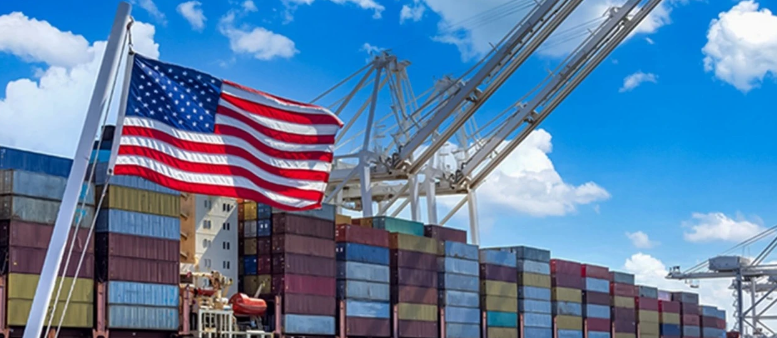
Furthermore, "232 investigations" targeting nine industries, including semiconductors, pharmaceuticals, drones, industrial robots, and polysilicon for solar panels, are also underway. Most of these investigations were initiated nearly a year ago, and the government may accelerate progress after the Supreme Court's ruling.
Analysts point out that the Trump administration's current approach aims to reshape the tariff framework through multiple legal avenues, while maintaining pressure on some countries and trying to avoid judicial disputes again. However, the frequent adjustments in tariff policies have brought new uncertainties to the global trade environment. The future direction of tariffs will depend on the U.S. domestic legal battles, the progress of external negotiations, and the responses of major trading partners.
Source: Weiyun.net
WeChat