Strait blockade, port suspension! Latest announcements from major shipping companies: cargo hold suspension, route diversions, surcharge collection!
Created on 03.03
On February 28th, the United States and Israel launched a joint military strike against Iran, causing a sharp escalation of the security situation in the Middle East.
The Islamic Revolutionary Guard Corps of Iran immediately announced a complete blockade of the Strait of Hormuz, leading to widespread chaos in the Middle Eastern maritime corridor.
Regarding the Red Sea, the Houthi forces in Yemen have stated that they will resume missile and drone attacks on vessels in the Red Sea region and Israeli targets in support of Iran.
Currently, multiple key ports are suspended, and shipping companies are urgently adjusting their operational strategies.
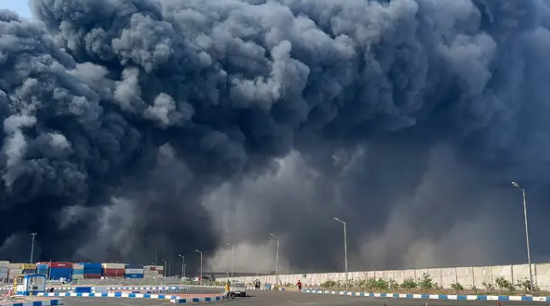
Strait of Hormuz Blockade, Shipping Lanes Interrupted
As a vital artery for global energy transportation, the Strait of Hormuz sees 200 to 300 vessels passing through daily, carrying a significant portion of the world's crude oil and refined oil. It holds an irreplaceable strategic position.
On the 28th, Iran explicitly announced via radio broadcast a prohibition on any vessel passing through the strait under any circumstances, leading to a large number of ships being stranded in the Persian Gulf and forcibly severing the connection with the global ocean trade system.
Meanwhile, the Middle East maritime corridor
All key nodes are affected
· The Red Sea region faces significantly increased security risks as the Houthi forces announced the resumption of attacks on merchant ships and targets related to Israel and the United States;
· Suez Canal routes have been suspended due to shipping companies collectively avoiding risks;
· A comprehensive avoidance directive for vessels in the Persian Gulf has taken full effect. Major liner companies have abandoned selective detours and are implementing a regional withdrawal strategy, leading to the paralysis of the entire Middle Eastern shipping network.
Multiple ports suspended, regional operations restricted
Due to security threats
Multiple core ports in the Middle East region
Suspended operations or restricted
Jebel Ali Port: The port experienced a berth fire caused by falling debris from air defense interceptions. The operator, DP World, announced a complete suspension of all terminal operations on March 1st, prohibiting vessels from entering the port. On March 2nd, Dubai DP World announced that the terminal has reopened and resumed normal operations.
Duqm Port, Oman: Targeted by two drone attacks. One drone hit a workers' dormitory, injuring one foreign worker, while the other crashed near a fuel storage tank. The port and Asyad dry dock have suspended operations.
Port of Bahrain: Port operations nationwide have been temporarily halted, with all maritime operations, including pilotage services, interrupted.
In addition, port operations in various Middle Eastern countries
showing a differentiated trend
· Ports in countries such as Saudi Arabia, Egypt, Jordan, and Pakistan are operating normally;
· All ports in Kuwait are open, but Shuwaikh Port has been upgraded to ISPS Level 2 security level;
· Qatari ports are open but operations are restricted, with reduced traffic and weakened GPS signals at Ras Laffan and Mesaieed ports;
· Port of Sharjah in the UAE is open normally, and ports of Fujairah and Khor Fakkan are operating at full capacity.
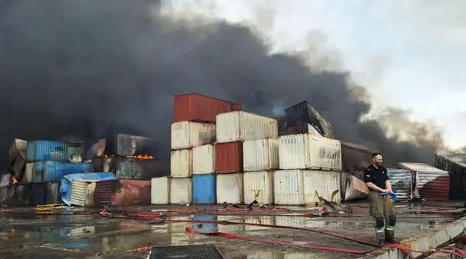
Shipping companies suspend bookings, reroute, and levy surcharges
To cope with and in case of emergencies
Multiple shipping companies have quickly initiated emergency responses
Taking a series of aggressive measures to deal with the crisis
Involving operational adjustments and the imposition of surcharges
1. Suspend bookings and vessel risk avoidance
MSC: Fully suspends new cargo bookings globally to the Middle East, instructs vessels in Gulf waters and en route to the region to anchor in designated safe waters, and booked cargo may face port changes or delays.
Maersk: Suspends all vessels passing through the Strait of Hormuz, closes offices in the UAE, Qatar, Oman, and other places. Its ME11 (Middle East-India to Mediterranean) and MECL (Middle East-India to US East Coast) routes are rerouted around the Cape of Good Hope. Vessels that have docked at Jebel Ali Port will remain on standby.
CMA CGM: Suspends all new bookings to the Middle East, suspends reefer bookings to and from multiple Middle Eastern countries, and instructs vessels in the Persian Gulf and those heading to the region to immediately proceed to a safe anchorage for避险 (seeking refuge/shelter).
COSCO Shipping: Vessels that have entered the Persian Gulf will complete their original operations and then wait in safe waters or at anchor. Vessels heading to the region will take measures such as reducing speed, proceeding to safe waters, or anchoring and waiting, while also evaluating alternative cargo discharge port plans.
Hapag-Lloyd: Suspends vessel passage through the Strait of Hormuz;
Zim Integrated Shipping Services: Operations at Ashdod Port and Haifa Port in Israel are normal, but dangerous goods transportation may be adjusted;
NYK Line, Mitsui O.S.K. Lines, and "K" Line instruct vessels to wait in safe areas.
2. Major Route Adjustments
Multiple Shipping Companies Abandon
Plans to Return to the Suez Canal in 2026
Collectively Choose to Reroute via the Cape of Good Hope
This includes Maersk's ME11 and MECL routes, CMA CGM's Suez Canal voyages, and Hapag-Lloyd's IMX route, all of which have been rerouted around the Cape of Good Hope.
Voyage durations for routes from Asia to Europe and from Asia to the US East Coast will increase by approximately 10-14 days.
It is widely believed that a full resumption of Red Sea routes in Europe by June-August 2026 is unlikely, leading to a significant reshaping of the global shipping capacity structure.
3. Emergency Surcharge Collection
To cover additional operating costs and security risks
Multiple shipping companies have announced
The collection of a special surcharge will commence on March 2nd.
CMA CGM announced the collection of an Emergency Conflict Surcharge (ECS):
· USD 2000 for a 20-foot container
· USD 3000 for a 40-foot container
· USD 4000 for refrigerated and special equipment containers
The scope of application includes all cargo to and from 13 Middle Eastern and surrounding countries such as Iraq, Bahrain, and Kuwait.
Hapag-Lloyd announced the collection of a War Risk Surcharge (WRS):
· USD 1500 per TEU for standard containers
· USD 3500 per unit for refrigerated and special equipment containers
Applicable to cargo to and from the Persian Gulf and the Arabian Gulf.
In special times, how to obtain
Port and vessel information within the war zone
Cargo tracking and abnormal situations?
Cargoact, a product under Weiyun.net, offers intelligent monitoring and real-time alerts to help you avoid risks and adjust strategies in advance!
The situation is unpredictable
If you are a freight forwarder, carrier, or shipowner
Cargoact can help you improve dynamic risk assessment
and flexible response capabilities
↓
Switch the special area view to "War Zone"
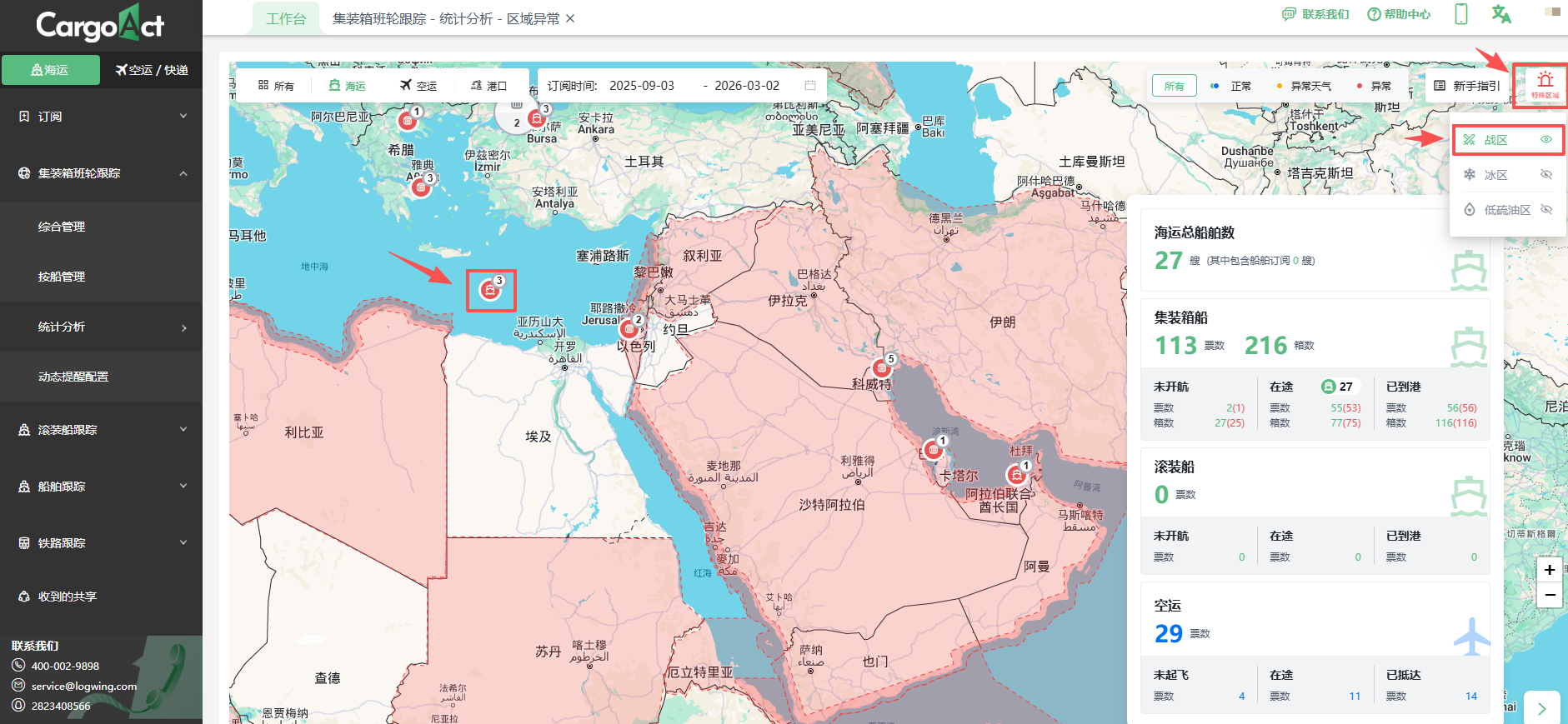
Click the corresponding marker on the map
Understand port conditions and vessel information
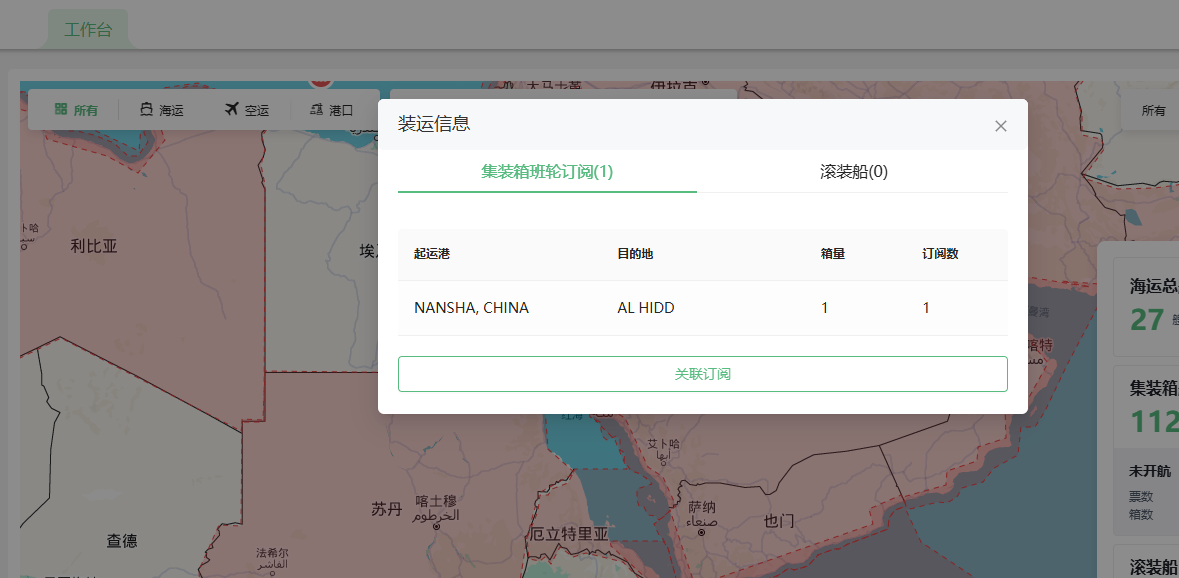
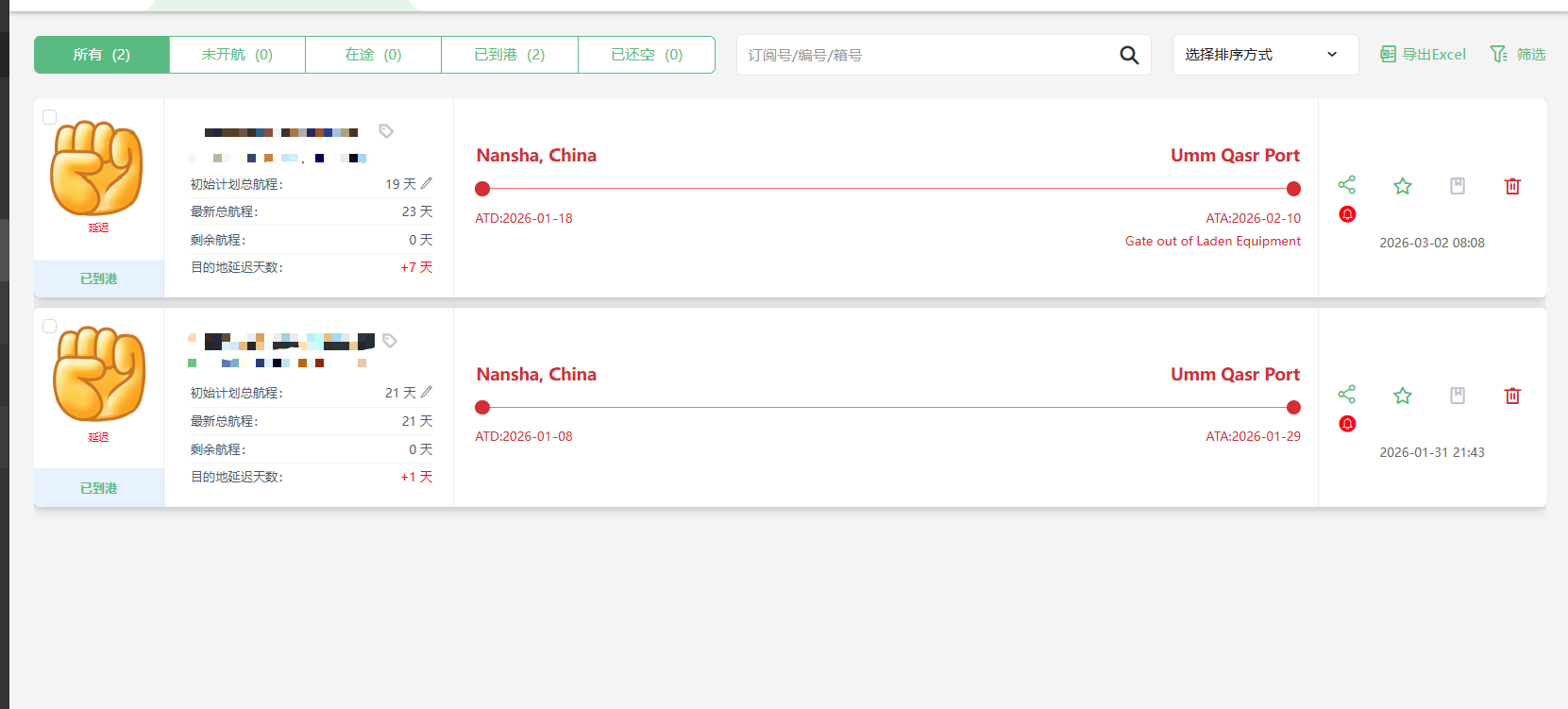
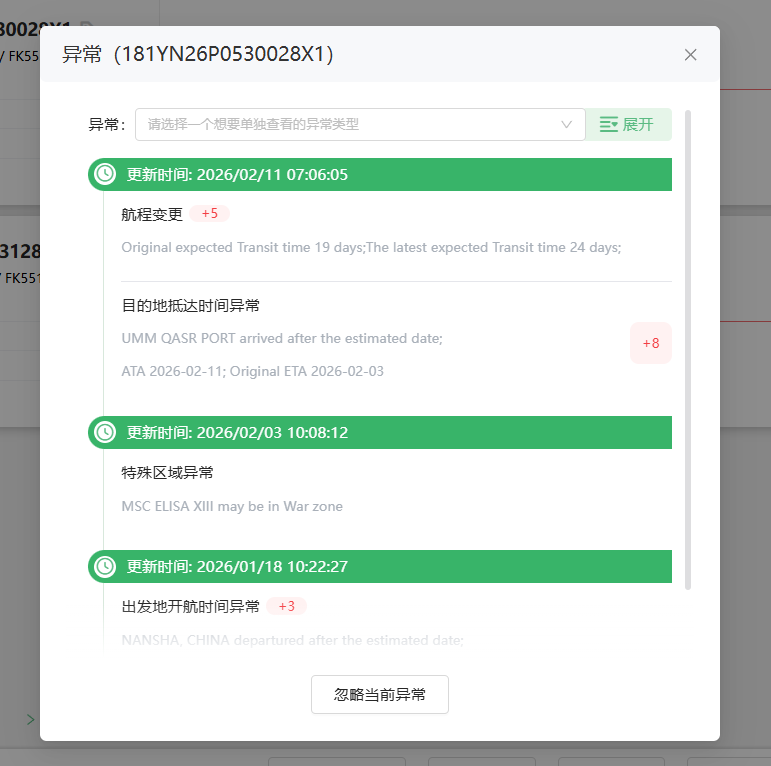
After clicking "Associate Subscription" for shipment information
you can view the details
Voyage changes and special area anomalies
can also be viewed promptly
This shipping crisis has evolved from a regional issue triggered by localized conflict into a systemic risk affecting global supply chain stability. Subsequent developments will highly depend on the trajectory of the Middle East situation.
Weiyun.com will closely monitor the current situation, port operation recovery, shipping company route adjustments, and other key dynamics, and update and release them in a timely manner.
Article Source: Weiyun.com
WeChat