22 countries reach consensus on escorting through the Strait of Hormuz, US reportedly plans to end war with Iran on April 9th
Created on 03.25
Previously, Lloyd's List reported that Iran plans to open a "safe maritime channel" in the Strait of Hormuz and intends to charge nearly $2 million in transit fees for passing merchant ships.
Last Sunday, an Iranian parliamentarian revealed that Iran has begun charging fees for some ships passing through the Strait of Hormuz, and relevant measures have been implemented in practice.
He frankly stated that "war has a cost," so levying transit fees on passing ships is "logical" and also reflects Iran's "sovereign authority" over the waterway.
According to The Wall Street Journal, 22 countries have jointly issued a statement to collectively participate in ensuring the freedom of navigation and safety in the Strait of Hormuz, with the vast majority being NATO member states.
These 22 countries include: UAE, UK, France, Germany, Italy, Netherlands, Japan, Canada, South Korea, New Zealand, Denmark, Latvia, Slovenia, Estonia, Norway, Sweden, Finland, Czech Republic, Romania, Bahrain, Lithuania, and Australia.
All parties have completed preliminary docking on the three key issues of escort operations in the Strait of Hormuz: core needs, deployment locations, and execution time. Military planners from various countries are simultaneously carrying out collaborative preparations.
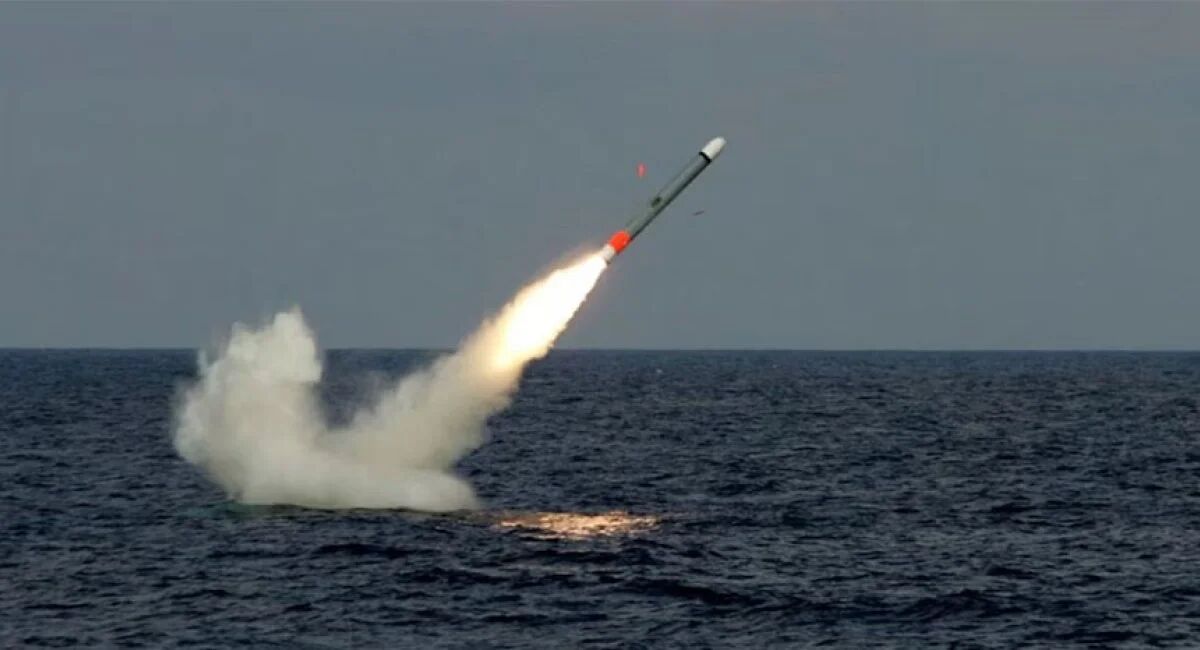
"Tomahawk" cruise missile. Image source: U.S. Department of Defense
According to China News Network, citing Israel's Ynet news website on the 23rd local time, an Israeli official revealed that the United States has set April 9th as the target date to end the war against Iran.
The official said that talks between Iran and the United States are expected to be held in Pakistan later this week.
According to reports, U.S. President Trump stated that the United States has held two days of talks with Iran on a plan to end the war and has withdrawn its previous 48-hour ultimatum demanding strikes on power plants.
However, Iran has denied engaging in any negotiations.
On the 21st, Trump posted on social media, demanding that Iran open the Strait of Hormuz within 48 hours, otherwise he would launch strikes on Iran's "various power plants" and destroy them.
After 48 hours passed, Trump stated that the U.S. and Iran had held "very good and productive" dialogue over the past two days, and the U.S. would "postpone by 5 days" strikes on Iranian power plants.
Iran has firmly denied this, stating that Trump's remarks may be "psychological warfare."
△ Strait of Hormuz (file photo) Source: CCTV.com
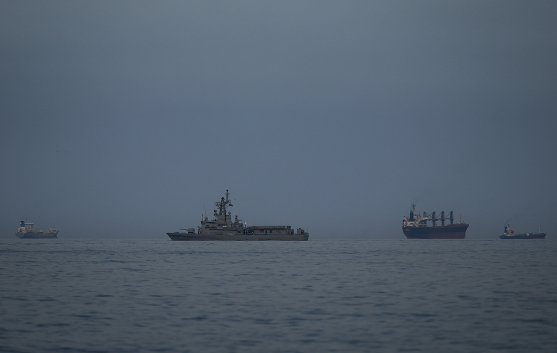
In addition, according to the latest report from CBS, U.S. intelligence agencies have detected at least twelve advanced naval mines of two models in this waterway.
Previously, Trump had stated that there were "no reports" of Iran mining the strait, but at the same time insisted that if Iran had indeed laid mines without the U.S. military's knowledge, they would all be cleared.
In response to the White House's escalating threats, Iran has threatened to "completely blockade" the strait using unspecified means.
Currently, the Iranian Foreign Ministry stated that as long as "non-hostile vessels" join the toll collection system controlled by Iran, they can use this waterway.
In reality, shipping through the Strait of Hormuz has significantly decreased, with only a small number of vessels choosing to navigate the waterway between Iran's Qeshm Island and Larak Island, which is entirely within Iranian territorial waters.
Source: Weiyun.net
WeChat