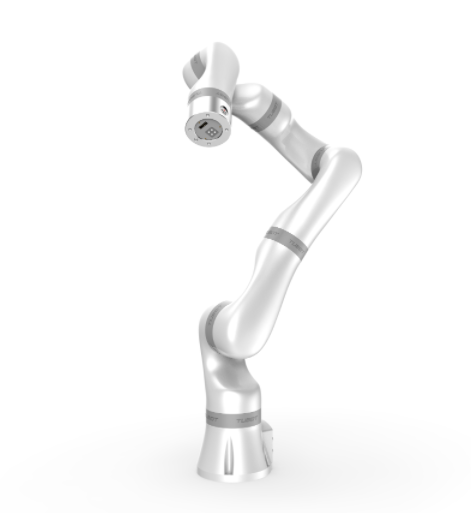

A collaborative robot, or cobot, is a type of industrial robot designed to safely interact with human workers in a shared workspace without the need for physical barriers or safety cages. Unlike traditional industrial robots that operate in isolation to ensure safety, cobots are built from the ground up for direct human-robot collaboration.
Key Characteristics:
Safety Features: Cobots incorporate multiple safety mechanisms, including force limiting (sensors that detect and limit contact forces), rounded edges without pinch points, and speed monitoring. These features enable them to stop automatically upon contact with a human, complying with safety standards such as ISO9001.
Lightweight and Compact: Constructed with lightweight materials such as aluminum and composites, cobots typically weigh between 5 to 10 kilograms, making them portable and easy to redeploy across different workstations.
Ease of Use: Cobots feature intuitive programming interfaces, often utilizing hand-guiding (lead-through programming) or tablet-based graphical interfaces. This eliminates the need for specialized programming expertise and allows quick setup by shop-floor personnel.
Sensitive Detection: Embedded torque sensors in each joint enable precise force control and collision detection, allowing cobots to perform delicate tasks such as assembly, polishing, and machine tending alongside humans.
Applications: Cobots are widely deployed in small and medium-sized enterprises (SMEs) as well as large manufacturing facilities for tasks including pick-and-place, palletizing, quality inspection, screw driving, and laboratory automation. Their flexibility, low total cost of ownership, and rapid deployment capabilities have made them one of the fastest-growing segments in the robotics industry.
Distinction: While all cobots are designed for collaboration, not all collaborative applications use cobots—traditional industrial robots can also operate collaboratively when equipped with appropriate safety systems and sensors.