


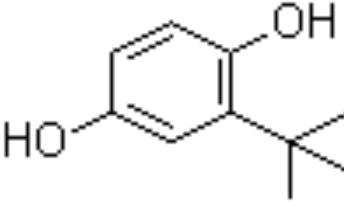

Chemical Property:
| Molecular Formula | C10H14O2 |
| Molar Mass | 166.22 |
| Density | 295 |
| Melting Point | 127-129°C(lit.) |
| Boling Point | 295 °C |
| Flash Point | 171 °C |
| Water Solubility | Slightly soluble in water(10g/L). |
| Solubility | Soluble in ethanol, acetic acid, ethyl ester, isopropanol, ether, vegetable oil, lard, etc., almost insoluble in water (25°C,<1%;95°C,5%). |
| Vapor Presure | 0.004Pa at 25℃ |
| Appearance | White to off-white (Solid) |
| Color | White to light tan, may contain black specs |
| BRN | 637923 |
| pKa | 10.80±0.18(Predicted) |
| Storage Condition | Store below +30°C. |
| Stability | Stable. Incompatible with strong bases, strong oxidizing agents. |
| Sensitive | Easily absorbing moisture |
| Refractive Index | 1.4859 (estimate) |
| MDL | MFCD00002344 |
| Physical and Chemical Properties | Appearance: white to light yellow Flake crystal content: ≥ 99% Melting Point: 127.5.0-129.0 ℃ |
| Use | Used as PVC anti-fish-eye agent and Food additive |
| Hazard Symbols | Xn - Harmful |
| Risk Codes | R22 - Harmful if swallowed R36/37/38 - Irritating to eyes, respiratory system and skin. |
| Safety Description | S26 - In case of contact with eyes, rinse immediately with plenty of water and seek medical advice. S36 - Wear suitable protective clothing. S28A - |
| UN IDs | UN3077 |
| WGK Germany | 3 |
| RTECS | MX4375000 |
| TSCA | Yes |
| HS Code | 29072900 |
| Hazard Class | 9 |
| Packing Group | III |
Introduction
2-tert-butylhydroquinone is an organic compound. The following is an introduction to its properties, uses, preparation methods, and safety information: Quality: - Appearance: Colorless crystalline solid. - Solubility: Soluble in water and organic solvents. Uses: - Adhesives: Used in products such as wallpaper glue, adhesives, and tape to increase adhesive and cohesive properties. - Rubber antioxidants: Can be used in rubber products to improve their heat resistance and oxidation resistance. Preparation method: 2-tert-butylhydroquinone can be prepared by the reaction of hydroquinone and tert-butanol. During the reaction, hydroquinone reacts with tert-butanol to produce 2-tert-butylhydroquinone, with water as a by-product. Safety information: - 2-tert-butylhydroquinone is a stable and relatively safe compound under normal operation and proper storage conditions. - When using it, avoid inhaling dust and contact with skin, eyes, and mucous membranes, and avoid prolonged exposure to the substance. - Store 2-tert-butylhydroquinone properly, away from fire and oxidizing agents, in a cool, dry place away from direct sunlight.
Application
tert-Butylhydroquinone (TBHQ, CAS 1948-33-0) is a synthetic phenolic antioxidant widely used as a food additive (E319) to prevent oxidative rancidity in edible oils, fats, fried foods, snacks, baked goods, nuts, and meat products. It effectively scavenges free radicals and chelates metal ions, extending shelf life and preserving flavor, color, and nutritional value. In cosmetics and personal care, TBHQ stabilizes formulations containing oils and butters, preventing spoilage. It is also employed as an antioxidant in animal feed, rubber, plastics, fuels, and lubricants to inhibit degradation and gum formation. TBHQ exhibits high thermal stability, making it suitable for high-temperature frying applications. It is often used synergistically with other antioxidants like BHA and BHT. Xinchem offers custom synthesis, custom chemical synthesis, and contract manufacturing of high-purity TBHQ with flexible scaling from R&D to commercial tons. Contact us today for a competitive quote and reliable global supply.

