
Product Introduction
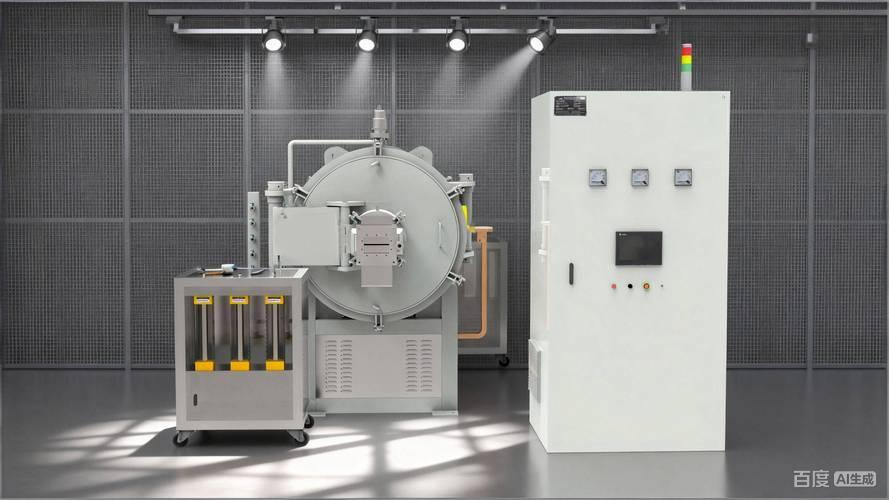
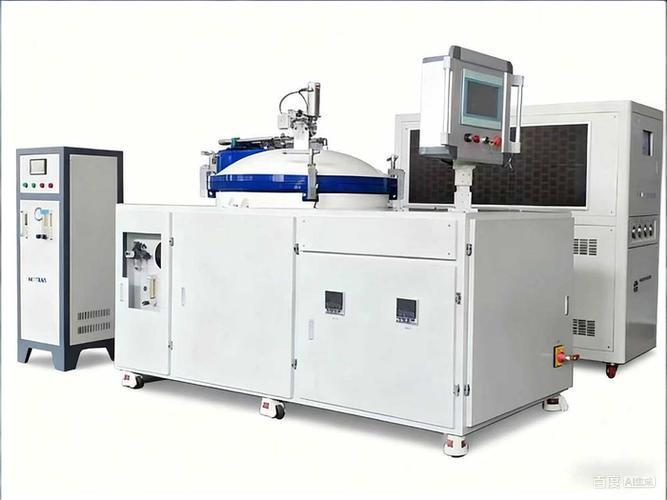
This series of rotary vacuum atmosphere sintering furnaces is a dynamic atmosphere heat treatment equipment specifically designed for lithium-ion battery anode materials (such as graphite, silicon-carbon, hard carbon, soft carbon, lithium titanate, etc.) and various powder particle materials. The equipment can complete sintering, carbon coating, and reduction processes in gas atmospheres such as nitrogen, hydrogen, methane, and acetylene. Its core feature is the continuous rotation of the furnace tube during operation, causing powder particles to continuously tumble and roll within the furnace tube, ensuring full contact with reducing or carbon source gases, significantly improving reaction uniformity and efficiency. This equipment overcomes problems such as local atmosphere unevenness and incomplete coating that are common in static sintering furnaces, making it an ideal production equipment for high-performance anode material development.
Technical Features
Dynamic rotary furnace tube design: The furnace body can be tilted, and the furnace tube rotates at a certain angle during the heating process. The rotation speed is steplessly adjustable, ensuring continuous tumbling and mixing of powder materials, eliminating "dead zones".
Excellent gas-solid contact: Powder particles are continuously exposed to fresh process gas (hydrogen, methane, acetylene, etc.) during rotation, significantly improving the uniformity of reduction reactions, carbon deposition, or nitridation reactions.
Multi-functional atmosphere system: Can introduce nitrogen (protection), hydrogen (reduction), methane/acetylene (carbon coating), argon, etc., with precise gas flow control, and valves and filters configured separately for inlet and exhaust.
High-precision temperature control: Multi-stagePIDProgram-controlled temperature, high temperature control accuracy, uniform temperature distribution inside the furnace tube, suitable for process curves of different anode materials (e.g., silicon-carbon composite, hard carbon pyrolysis).
Sealing and Safety Structure: Dynamic sealing devices are used at both ends of the furnace tube to maintain good airtightness under rotating conditions; equipped with safety protections such as over-temperature alarm, hydrogen leakage detection, and pressure interlock.
Easy material cleaning: The furnace tube is detachable or designed with an outlet port, and the tilt angle is easily adjustable, facilitating powder loading, unloading, and cleaning, suitable for multi-variety switching.
Application Fields
Lithium-ion battery anode materials: Surface carbon coating of graphite anodes (CVDmethod), reduction treatment of silicon anodes, hard carbon/carbonization or activation of soft carbon, high-temperature solid-phase synthesis of lithium titanate.
Powder metallurgy and metal powders: Hydrogen reduction of tungsten powder, molybdenum powder, nickel powder, etc.; surface passivation of iron powder, copper powder, etc./Antioxidant treatment.
Carbon material preparation: High-temperature atmosphere purification or doping of activated carbon, carbon nanotubes, and graphene powder.
Catalyst and Hydrogen Storage Materials: Reduction and sintering of catalyst powders; activation treatment of hydrogen storage alloy powders.
Other inorganic powders: Pre-treatment of precursors for cathode materials such as lithium iron phosphate and lithium cobalt oxide (but mainly focused on the anode field).
Product Advantages
Extremely high powder uniformity: Dynamic rotation allows every powder particle to repeatedly contact the reaction gas, avoiding the "burnt outside, tender inside" or uneven coating phenomena that occur in static sintering.
Enhanced reduction/Coating effect: Especially in hydrogen reduction or methane pyrolysis carbon coating processes, the conversion rate and coating density are significantly superior to static furnaces, effectively improving the first Coulombic efficiency and cycle stability of anode materials.
High production efficiency: Capable of continuous or semi-continuous feeding, with a reasonable aspect ratio design of the furnace tube for large processing volumes; rapid heating/cooling and discharge structure shorten process intervals.
Strong process flexibility: The same equipment can complete sintering experiments and batch production under various gas atmospheres and different temperature profiles, adapting to all stages from R&D to pilot production and mass production.
Reduced gas consumption: Improved gas utilization in the dynamic process, saving protective gas compared to static furnaces./Reaction gas consumption, reducing process costs.
Simple operation and maintenance: Quick-release design for sealing at both ends of the furnace tube, making it easy to clean residual powder; one-key programming for the control system, automatically executing rotation, heating, and ventilation processes.


