
Product Introduction
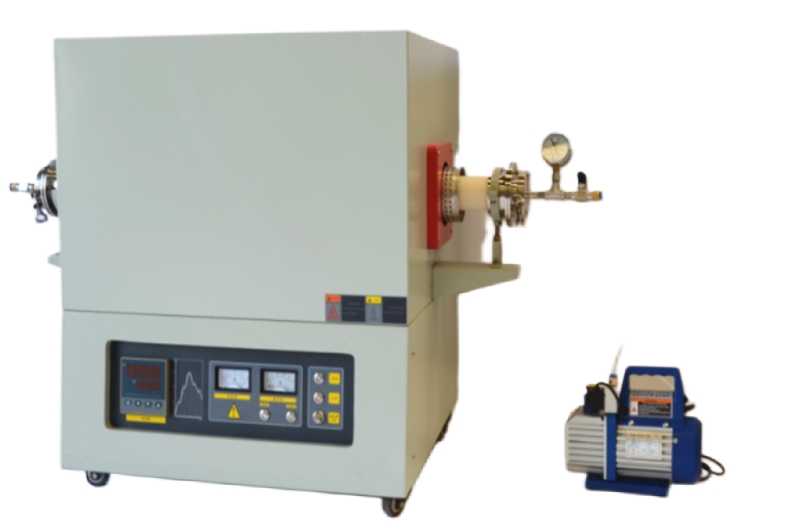
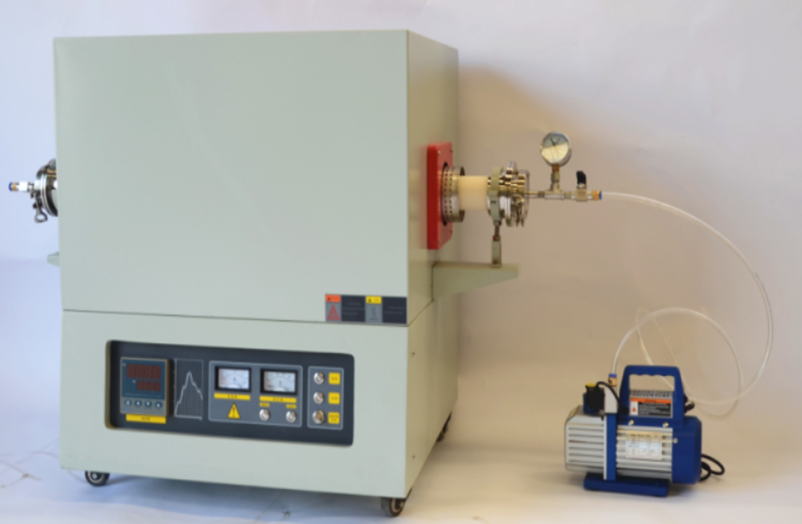
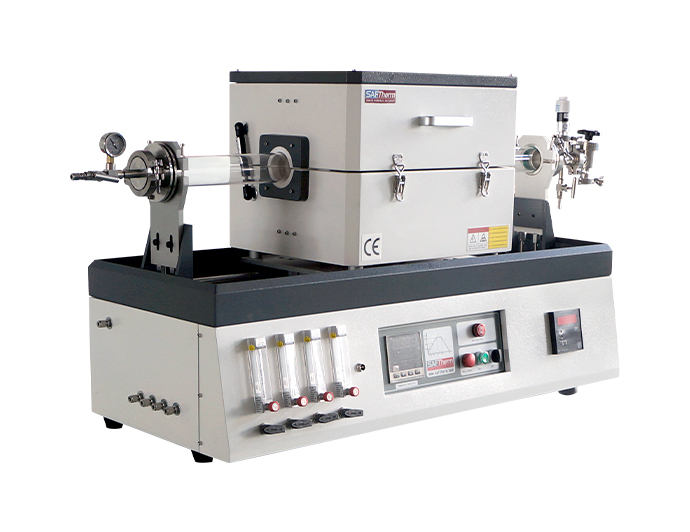
This series of vacuum atmosphere tube furnaces is a compact heat treatment equipment that integrates vacuum, atmosphere protection, and high-temperature heating. It is mainly used for heat treatment of metals, non-metals, ceramics, new materials, new energy and other materials at high temperatures and high/Sintering, annealing, aging, brazing, catalytic reactions and other processes in a low vacuum or controlled atmosphere environment. The equipment has a simple structure, small size, rich functions, and economical cost, making it an ideal choice for laboratory R&D and small-batch production in enterprises.
Technical features
Multi-functional process environment: supports vacuum (high vacuum/low vacuum), inert atmosphere, reducing atmosphere, and other heat treatment conditions, one machine for multiple uses.
Compact tube structure: Adopts a rigid corundum tube arranged horizontally or vertically/Quartz tube as the working chamber, small volume, less space occupied, convenient sample loading and unloading.
High-precision temperature control system: equipped withPIDIntelligent adjustment program, temperature control accuracy up to±1°C, supports multi-stage heating/Holding/Cooling curve setting.
High-quality heating elements: resistance wire (1200°C), silicon carbide rods (1400°C) or silicon molybdenum rods (1600°Cabove), uniform and stable heating.
Good vacuum and airtightness: excellent system sealing performance, can reach-0.1 MPa(or higher vacuum), and can precisely introduce various process gases.
Safety protection functions: Features safety measures such as over-temperature alarm, thermocouple break protection, overcurrent protection, and tube rupture detection (optional) for reliable operation.
Optional configuration: Can be equipped with a mass flow meter (MFC) for multi-channel gas mixing control, or equipped with a rapid cooling system to improve process efficiency.
| Product model | X1700-60 | X1700-80 | X1700-100 |
| Furnace chamber size | Ø60mm | Ø80mm | Ø100mm |
| Effective zone | 200mm | ||
| Maximum temperature | 1200℃/1400℃/1700℃ | ||
| Heater | Resistance wire/Silicon carbide rod/Silicon molybdenum rod | ||
| Shell structure | Double-layer air-cooled shell structure | ||
| Insulation material | Alumina polycrystalline fiber | ||
| Temperature control accuracy | ±1℃ | ||
| Temperature control method | PIDAdjustment | ||
| Heating rate | ≤20℃/min | ||
| Ultimate vacuum | ≤-100Pa | ||
| Ultimate pressure | ≤20KPa | ||
| Control system | Touch screen, fully automaticPLCControl system | ||
Note: Non-standard customization can be made according to actual working conditions.
Application fields
New material R&D: synthesis and sintering of phosphors, carbon nanotubes, graphene, ceramic powders, etc. under vacuum or atmosphere.
Metal and non-metal heat treatment: vacuum annealing, hydrogen reduction, nitriding, etc. for small parts or powder materials.
Semiconductors and New Energy: Experimental sintering and synthesis of photovoltaic materials, and lithium battery cathode and anode materials.
Universities and research institutes: laboratory research and teaching demonstrations in materials, physics, chemistry, electronics, and other disciplines.
Small-scale enterprise production: for small to medium-scale production tasks such as precious metal refining, catalyst activation, and precision brazing.
Advantages
Simple structure, convenient operation: No complex installation required, user-friendly interface, ordinary laboratory personnel can get started.
Compact size, space-saving: can be placed on a standard workbench or in a fume hood, especially suitable for laboratories with limited space.
Versatile and adaptable: can perform vacuum treatment and various atmosphere protections, meeting different material process requirements.
Economical cost, high cost-performance: Compared with large vacuum furnaces or atmosphere furnaces, the investment cost is low, making it the preferred choice for startups and research teams.
Precise temperature control, good repeatability:PIDPrecise adjustment ensures process consistency and improves experimental and product quality.
Safe and reliable: multiple protection systems and sealing design ensure the safety of operators and samples.
Easy to expand: Modules such as multi-channel atmosphere control and exhaust gas treatment can be conveniently upgraded to adapt to more complex process requirements.


