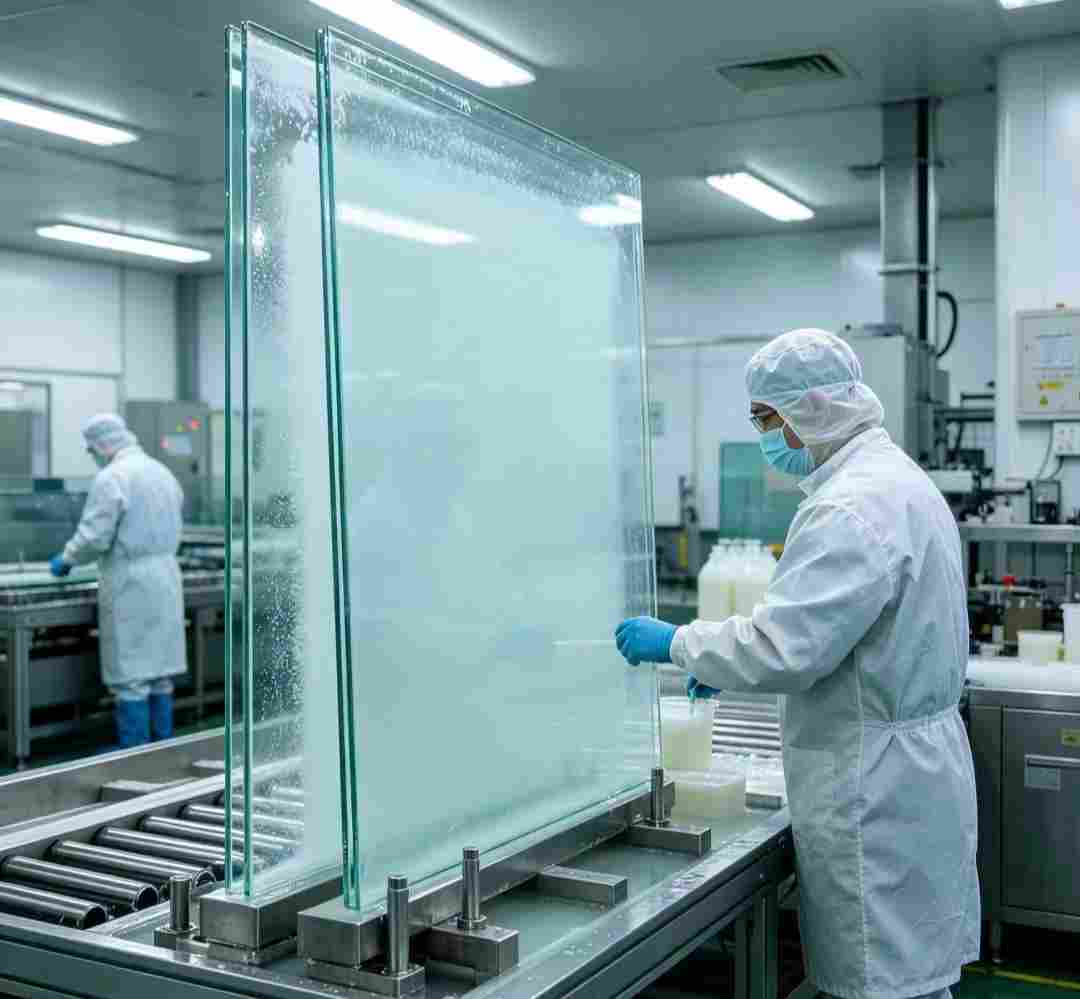
Essential details
Quantity(pieces):10
MOQ:1T
Lead time:15Days
Shipping:sea transportation
Specification Number:ZLLSIL-MF200 Silica Dispersion (Fumed SIlica / Nano SIlica for Fire-Resistant Glass)
Package Description:Woven bag ton bag
Product Introduction
Fumed SIlica / Nano SIlica for Fire Rated Glazing
Manufacturer: ANDEHU NEW MATERIALS (SHANDONG) CO., LTD
1. Product Overview
Curtain wall grade Fumed SIlica / Nano SIlica for fire rated glazing is a high-end dedicated material developed for exterior fire-rated glass curtain wall systems. Built on general-purpose products, it enhances weathering stability, structural bonding strength and long-term optical reliability, meeting the stringent requirements of high-rise and super high-rise building curtain walls. The product strictly complies with GB/T 15763.1 Safety Glass for Building Use – Part 1: Fire Resistant Glass, achieves full coverage of Class A insulating fire glass ratings, and adapts to curtain wall engineering requirements including wind pressure resistance, UV resistance and thermal cycling resistance.
Combined with the production and application characteristics of curtain wall fire glass, Shandong Zhonglian Chemical optimizes the particle size distribution and surface modification formula of the colloid, solving common problems of ordinary Fumed SIlica / Nano SIlica such as yellowing, delamination and cracking after long-term outdoor use, and providing safe and durable fire protection solutions for modern building curtain walls.
2. Exclusive Curtain Wall Grade Performance
2.1 Excellent Weathering and Aging Resistance
Through surface densification modification technology, UV resistance, water resistance and acid resistance of the cured colloid are greatly improved. After 1000 hours of QUV accelerated aging test, light transmittance loss is ≤2%, with no yellowing, chalking or peeling. It meets the 25+ year service life requirement for outdoor curtain walls, and is suitable for projects in coastal and high-UV radiation areas.
2.2 High-strength Structural Bonding
The bonding strength between the cured gel layer and glass substrate reaches ≥2.5MPa, much higher than general-purpose products. Silanol groups form chemical bonds with the glass surface and match the thermal expansion coefficient of glass. No stress cracking occurs under thermal cycling from -40℃ to 80℃, ensuring structural safety of the curtain wall system under extreme temperature differences.
2.3 Large-size Pouring Adaptability
Optimized for large-panel curtain wall glass production, the colloid features uniform fluidity and curing shrinkage ≤3%. It enables bubble-free, flow-mark-free uniform pouring for glass panels over 2m×3m, significantly improving yield and adapting to industrial prefabrication of unitized curtain walls.
2.4 Dual Excellence in Fire Integrity and Insulation
Beyond meeting fire insulation requirements, it delivers enhanced fire integrity. In standard fire resistance tests, temperature rise on the unexposed surface is uniform without local hot spots. The gel layer does not collapse or delaminate at high temperatures, maintaining glass structural integrity and preventing flame and smoke penetration, in line with the design concept of curtain wall fire separation.
3. Fire Protection Solutions for Curtain Wall Systems
3.1 Unitized Curtain Wall Fire Glass
Adapted to factory prefabrication of unitized curtain walls, the curing speed is adjustable to match assembly line rhythms. Finished products feature high dimensional accuracy and are ready for on-site hoisting, greatly improving installation efficiency.
3.2 Framed Curtain Wall Fire Glass
Suitable for on-site gluing construction. The colloid has good thixotropy and does not flow during vertical pouring. After curing, it shows good compatibility with frame sealing systems, causing no corrosion or swelling to aluminum profiles and sealants, adapting to various framed curtain wall structures.
3.3 Fire Barrier in Double Skin Facades
Used as an intermediate fire separation layer in double skin facades, it is lightweight and transparent, does not affect ventilation and daylighting, and blocks vertical fire spread in curtain wall cavities, meeting fire compartment design codes for high-rise buildings.
4. Production Process Control Points
Curtain wall grade products require stricter production environment and process control. The following process flow is recommended:
1.Substrate Pretreatment: Clean glass substrates with pure water and treat with plasma to ensure surface cleanliness and improve bonding reliability
2.Constant Temperature Blending: Mix formulas in a 23±2℃ constant temperature environment, with low-speed stirring and vacuum degassing to avoid bubble entrainment
3.Clean Room Pouring: Use automatic pouring equipment in a class 10,000 clean room to control pouring speed and liquid level for uniform thickness
4.Step Curing: Adopt three-stage temperature curing to eliminate internal stress and ensure flatness and optical quality of large-size products
5.Full Inspection Before Delivery: Each product undergoes appearance, transmittance, thickness deviation and stress inspection to meet curtain wall grade quality standards
5. Technical Specifications
表格
Item Curtain Wall Grade Index Test Standard
Silica Content 45%~55% Gravimetric method
Average Particle Size 90~110nm Dynamic light scattering
pH Value (25℃) 9.5~10.2 pH meter method
Viscosity (25℃) 20~40mPa·s Rotational viscometer
Visible Light Transmittance ≥90% GB/T 2680
Bonding Strength ≥2.5MPa Tensile bonding test
Fire Resistance Rating 1.0~3.0h GB/T 15763.1
UV Aging Resistance Light transmittance loss ≤2% QUV-B 1000h
Thermal Cycling No crack, no delamination -40℃~80℃, 50 cycles
Curing Shrinkage ≤3% Volume change rate test
6. Engineering Application Advantages
Complies with national building fire design codes, usable as Class A insulating fire separation components and meeting fire acceptance requirements
High optical clarity, preserving architectural facade aesthetics and maintaining overall curtain wall design consistency
All-inorganic material with Class A combustion performance: smoke-free, non-combustible, non-toxic gas release, meeting public building fire safety requirements
Good compatibility with various curtain wall sealants and structural adhesives, facilitating system integration and reducing compatibility risks
Stable performance with minimal batch variation, supporting mass supply and tight schedules for large construction projects
1. Q: What is curtain wall grade Fumed SIlica / Nano SIlica ?
A: An upgraded version with enhanced weather resistance for exterior curtain walls.
2. Q: Can standard grade be used for exterior curtain walls?
A: Not recommended; curtain wall grade has better UV and weather resistance.
3. Q: What is its service life outdoors?
A: Designed for 25+ years under normal conditions.
4. Q: Does it resist UV aging?
A: Yes, ≤2% transmittance loss after 1000h QUV-B test.
5. Q: Does it resist thermal cycling?
A: Withstands -40℃ to 80℃ thermal cycling for 50 cycles without cracking.
6. Q: Is it suitable for coastal areas?
A: Yes, improved water and salt spray resistance.
7. Q: Does it cause efflorescence on edges?
A: Low-sodium formula effectively suppresses alkali efflorescence.
8. Q: Does it yellow after long-term outdoor use?
A: No, anti-yellowing formula maintains clarity.
9. Q: Is it compatible with aluminum frames?
A: Yes, no corrosion or swelling to aluminum profiles.
10. Q: Is it compatible with silicone sealants?
A: Yes, good compatibility with common curtain wall sealants.
11. Q: Which curtain wall systems does it fit?
A: Unitized curtain walls, framed curtain walls and double skin facades.
12. Q: Can it be used for unitized curtain wall prefabrication?
A: Yes, curing speed matches factory assembly line rhythm.
13. Q: Does it meet wind pressure requirements?
A: High bonding strength ensures curtain wall structural safety.
14. Q: What fire rating is available for curtain walls?
A: 1.0h to 3.0h Class A insulating rating.
15. Q: Does it affect facade aesthetics?
A: High transparency preserves original facade design.
16. Q: Is it suitable for super high-rise buildings?
A: Yes, it meets strict fire and structural requirements.
17. Q: Can it be used for double skin facade fire barriers?
A: Yes, it blocks vertical fire spread in the cavity.
18. Q: Does it crack in cold winters?
A: Matched thermal expansion with glass prevents stress cracking.
19. Q: Is on-site pouring possible?
A: Framed curtain wall grade supports on-site gluing.
20. Q: Does it comply with building fire codes?
A: Yes, meets GB/T 15763.1 and relevant international standards.
---
### Group 6: Quality & Stability FAQs
1. Q: How do you ensure consistent quality?
A: Full-process quality control from raw material to finished product.
2. Q: Is each batch tested?
A: Yes, full inspection before delivery with COA provided.
3. Q: What quality system is certified?
A: ISO 9001 quality management system.
4. Q: Will it gel during storage?
A: No, under recommended storage conditions it stays stable for 12+ months.
5. Q: Will it delaminate or precipitate?
A: Charge stabilization technology prevents sedimentation and delamination.
6. Q: Does pH change during storage?
A: It remains stable within the specified range.
7. Q: What happens if it freezes?
A: Freezing may damage colloidal structure; avoid freezing.
8. Q: Does sunlight affect it?
A: Long-term direct sunlight is not recommended; store in shade.
9. Q: Will it grow mold?
A: Fully inorganic formula, no mold growth.
10. Q: Is there batch-to-batch viscosity variation?
A: Variation is strictly controlled within a narrow range.
11. Q: Do you provide third-party test reports?
A: Yes, SGS/BV/TUV test reports are available.
12. Q: Can customers arrange factory inspection?
A: Yes, factory audits are welcome by appointment.
13. Q: Does it meet REACH/RoHS?
A: Yes, compliant with REACH and RoHS standards.
14. Q: Is there a return policy for quality issues?
A: Quality issues are handled per formal quality agreement.
15. Q: How to judge if it has expired?
A: Obvious gelation, delamination or sharp viscosity rise means expiration.
16. Q: Does purity affect optical performance?
A: Yes, higher purity means better clarity and anti-yellowing.
17. Q: Why is narrow particle size distribution important?
A: It ensures uniform curing and consistent optical quality.
18. Q: Is the product traceable?
A: Yes, each batch has a unique number for full traceability.
19. Q: Do you offer stability test data?
A: Yes, accelerated aging and long-term storage data are available.
20. Q: Is the formula fixed?
A: Standard grades are fixed; custom grades can be adjusted.
---
### Group 7: Storage, Packaging & Logistics FAQs
1. Q: What packaging options are available?
A: 25kg drum, 200kg drum, 1000kg IBC tote.
2. Q: What packaging material is used?
A: Food-grade PE / HDPE material.
3. Q: What is the storage temperature?
A: 5–35℃, cool and dry place.
4. Q: Should it be stored sealed?
A: Yes, always seal tightly after use to prevent water evaporation.
5. Q: Can it be stored outdoors?
A: Not recommended; avoid direct sun and freezing.
6. Q: What is the shelf life?
A: Minimum 12 months in original sealed packaging.
7. Q: Can shelf life be extended?
A: Proper storage helps; opened drums should be used soon.
8. Q: Is it dangerous goods?
A: No, it is general cargo, non-hazardous.
9. Q: Can it be shipped by sea?
A: Yes, moisture-proof packaging is standard for sea freight.
10. Q: Is UN packaging available?
A: Yes, UN-certified IBC totes for export.
11. Q: What is the loading quantity per 20ft container?
A: Depends on packaging; details available on request.
12. Q: Can it be shipped in winter?
A: Yes, but avoid freezing during transport.
13. Q: What if it leaks during transport?
A: Rinse with water; it is non-corrosive.
14. Q: Is palletized packaging available?
A: Yes, standard palletized for forklift handling.
15. Q: Can packaging be customized?
A: Yes, custom labeling and package size are supported.
16. Q: How to handle empty drums?
A: Rinse with water before disposal or recycling.
17. Q: Is vacuum packaging needed?
A: No, sealed drum packaging is sufficient.
18. Q: Does it need nitrogen filling?
A: Not required for standard grades.
19. Q: What is the lead time?
A: 7–15 days for standard grades.
20. Q: Can you arrange door-to-door delivery?
A: Yes, multiple trade terms available.
---
### Group 8: Selection & Procurement FAQs
1. Q: Which grade should I choose for 1h fire rating?
A: 30–40% solid content, small-medium particle size.
2. Q: Which grade for 2h fire rating?
A: 40–50% solid content, medium particle size.
3. Q: Which grade for 3h fire rating?
A: 50–55% solid content, large particle size.
4. Q: What grade for exterior curtain walls?
A: Special curtain wall grade with weather resistance.
5. Q: What grade for interior fire doors?
A: Standard 30–40% grade is sufficient and cost-effective.
6. Q: Can I get free samples?
A: Yes, free samples are available for testing.
7. Q: What is the minimum order quantity?
A: 1 ton for standard grades; custom grades negotiable.
8. Q: Can you customize particle size?
A: Yes, within 60–120nm range.
9. Q: Can you customize solid content?
A: Yes, 30–55% customizable.
10. Q: Do you offer OEM/ODM?
A: Yes, OEM and custom formulation services are supported.
11. Q: What documents are provided?
A: COA, MSDS, TDS, certificate of origin, etc.
12. Q: What trade terms do you accept?
A: EXW, FOB Qingdao, CIF, CIP, etc.
13. Q: What payment terms are available?
A: T/T, L/C and other negotiable terms.
14. Q: Do you have stock available?
A: Standard grades are kept in regular stock.
15. Q: Can you supply large projects continuously?
A: Yes, large production capacity supports bulk stable supply.
16. Q: Do you provide technical support?
A: Yes, formulation tuning and on-site support are available.
17. Q: How to request a quote?
A: Contact us with required grade, quantity and destination.
18. Q: Can I visit your factory?
A: Welcome, please make an appointment in advance.
19. Q: Do you have local distributors?
A: Contact us for the latest distributor network.
20. Q: Can we sign an annual supply agreement?
A: Yes, framework agreements for long-term cooperation are welcome.